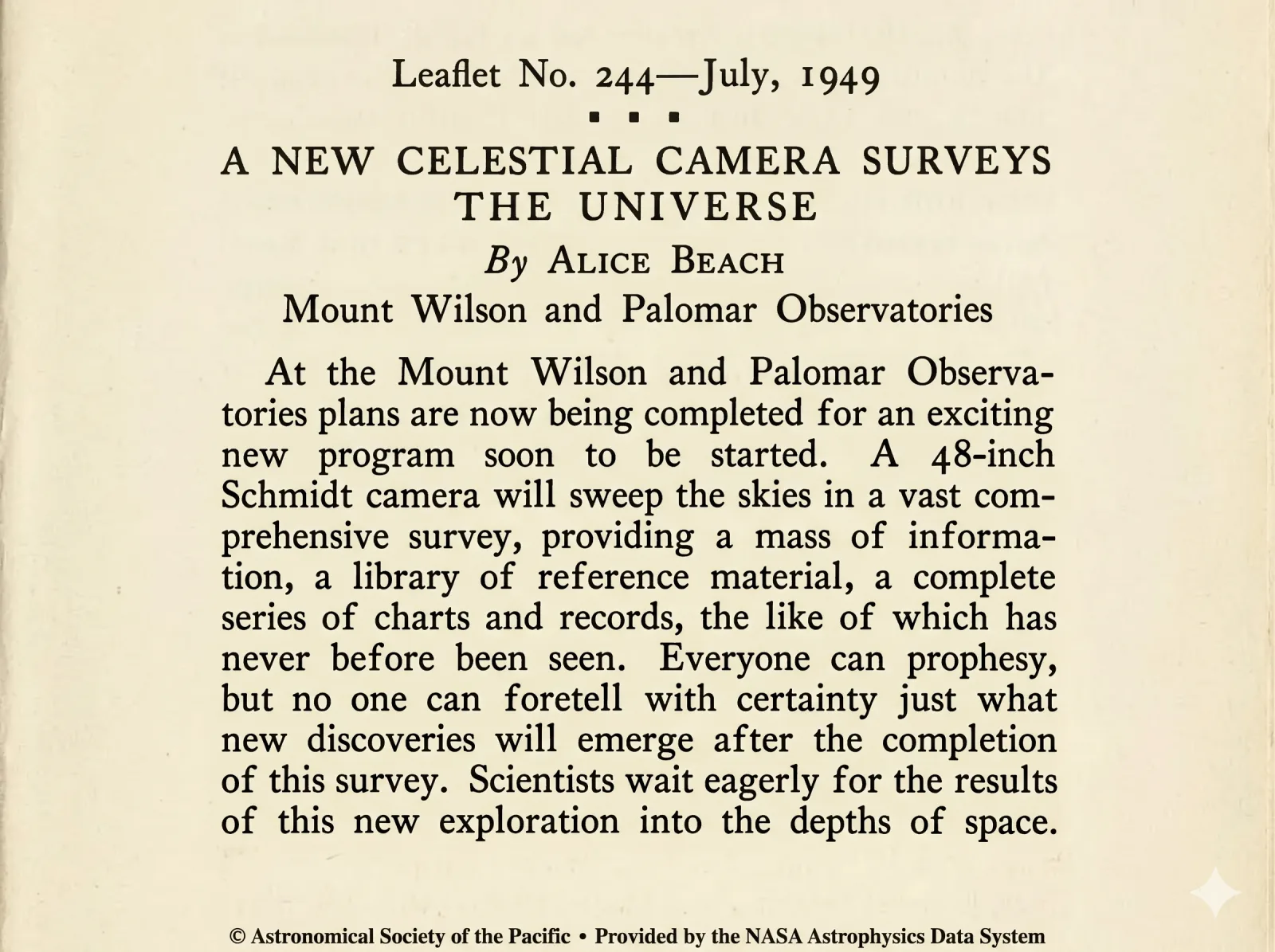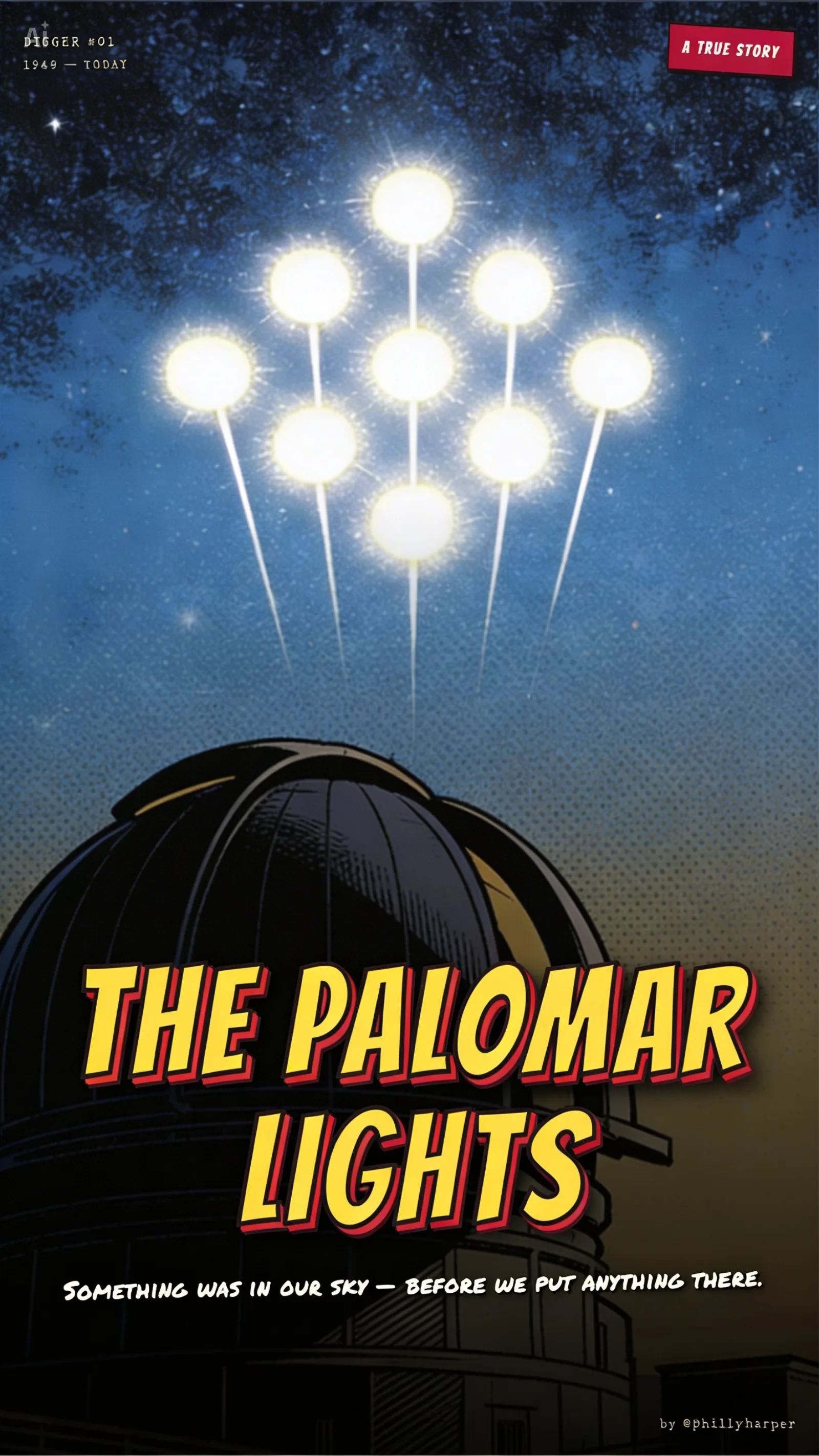
the digger - 001
phillyharper
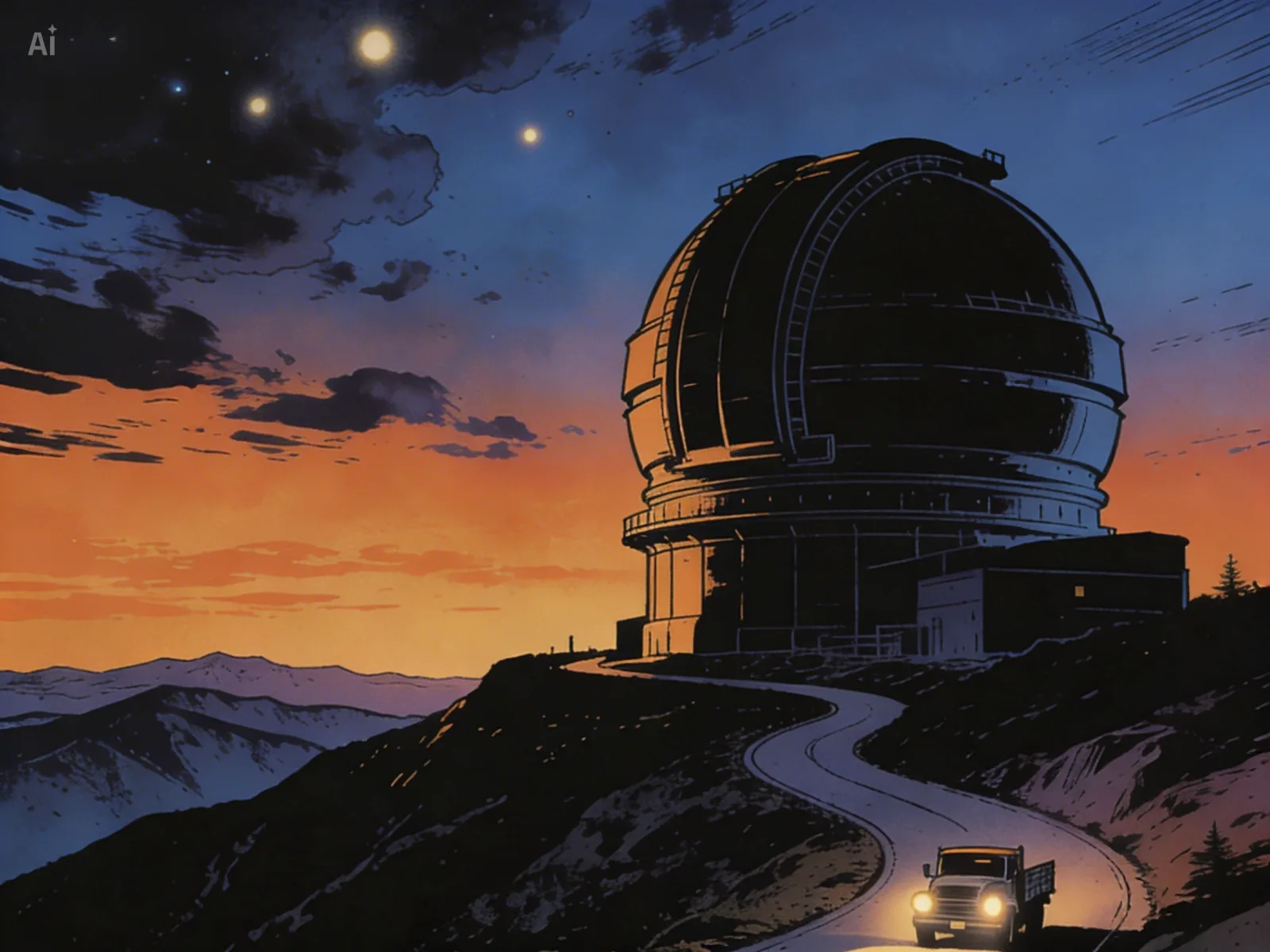
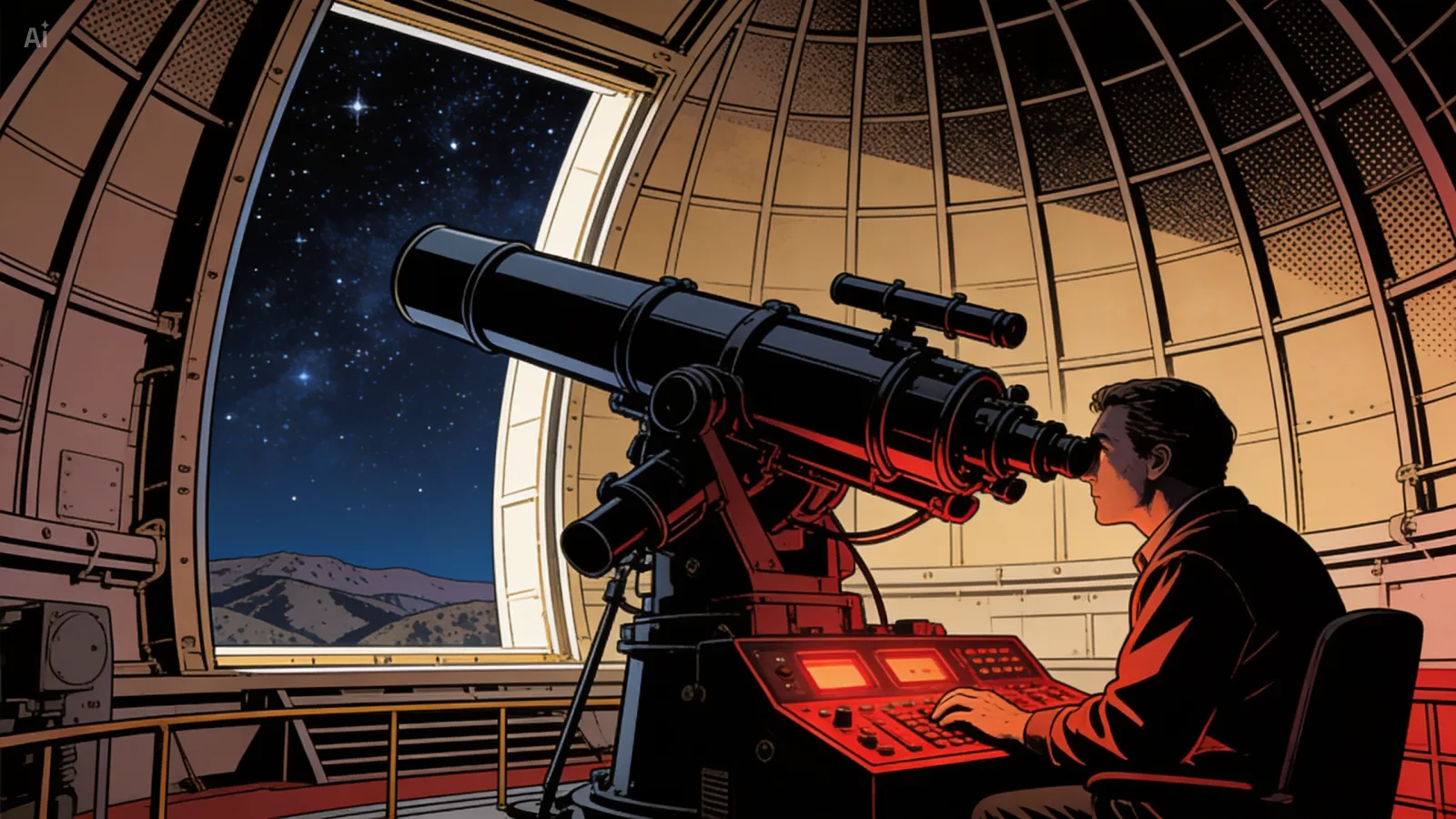
Palomar Mountain, California.
November 1949.
Five thousand feet above the orange groves and the Navy airfields of San Diego County, the most ambitious map of the sky ever attempted is about to begin.
George Abell is a graduate student. From this observatory he will discover 2,712 galaxy clusters. But tonight, he just needs clear skies.
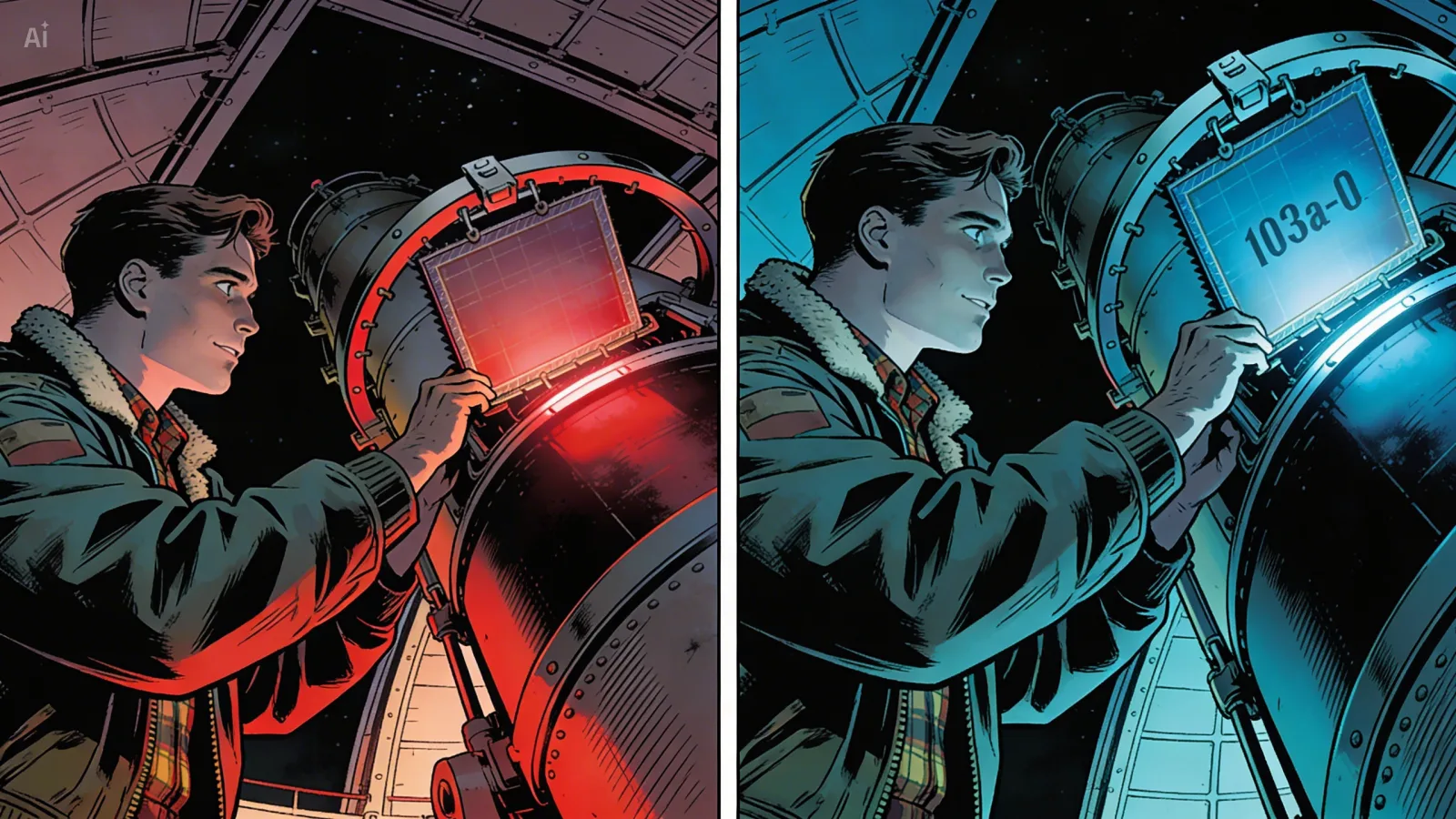
George is mapping a patch of sky. Each patch is photographed twice — once on a red-sensitive plate (fifty minutes), once on a blue plate (ten minutes). Two portraits of the same stars, in two colors of light, taken minutes apart.
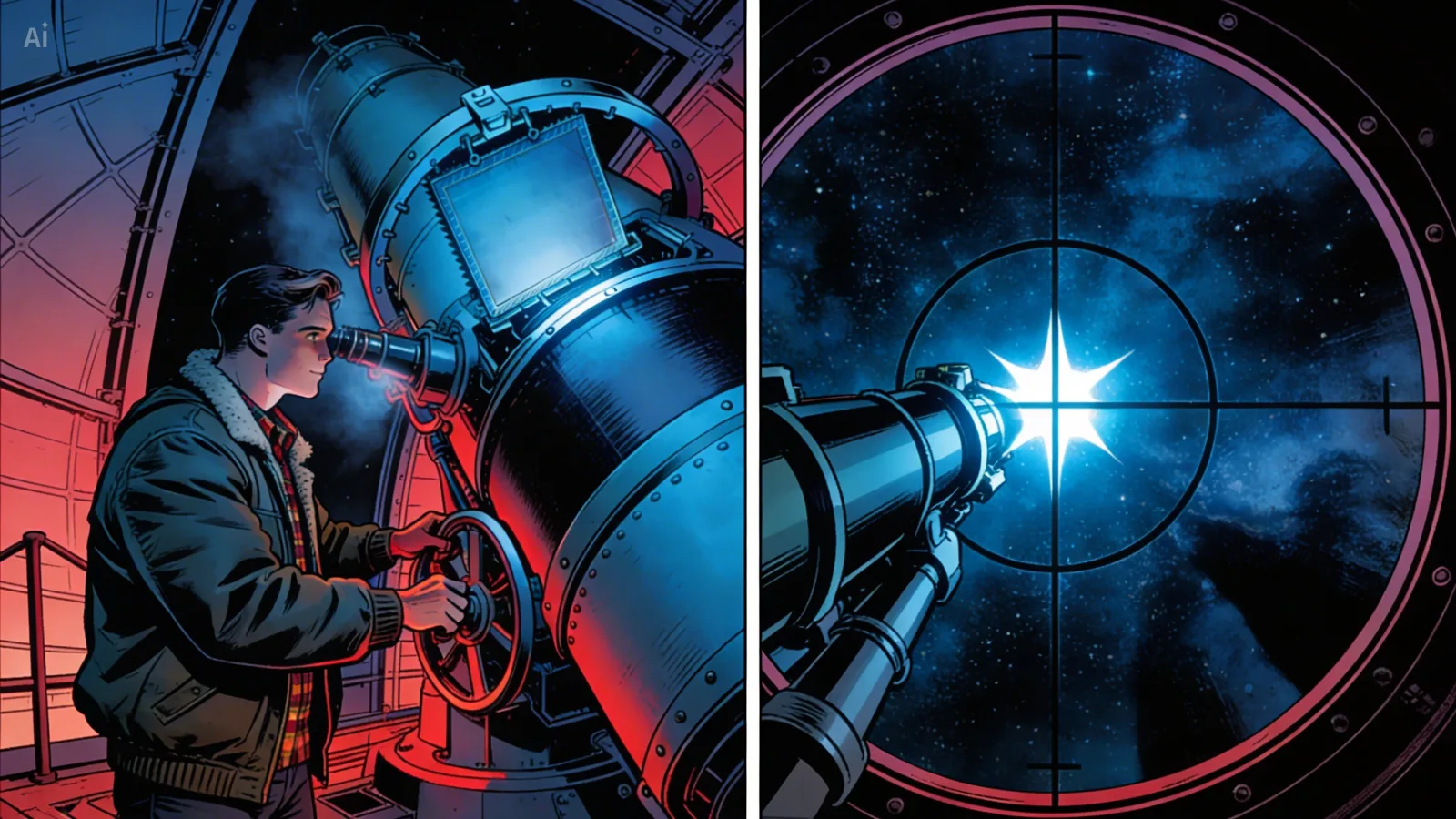
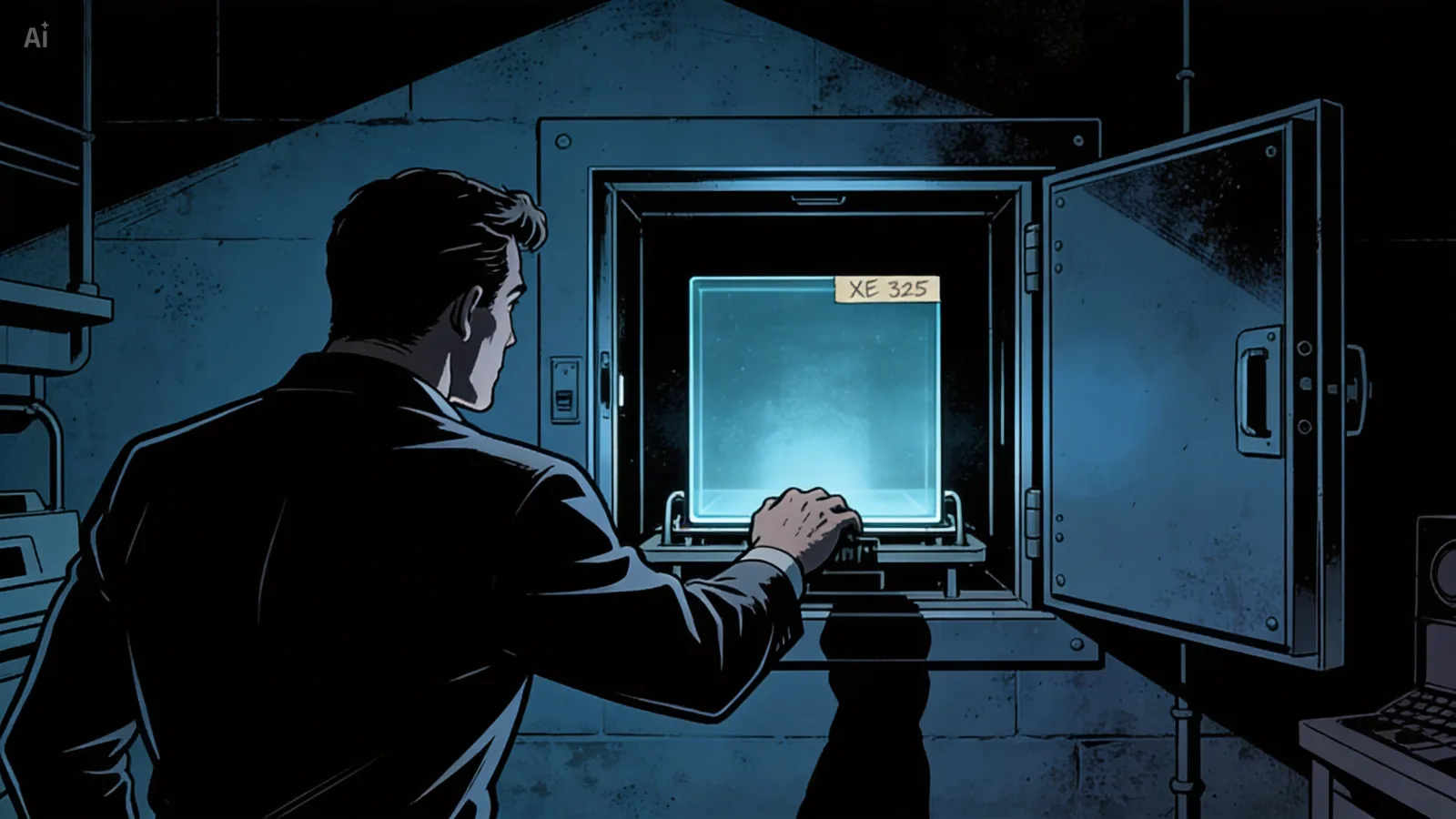
For each exposure, someone must sit at the guide telescope and keep a star centered by hand. Fifty minutes. In the cold. Night after night, for seven years.
After the exposure, the plate rides a dumbwaiter to the darkroom. Development must happen in absolute blackness. No safelights — the emulsion sees every colour of light.
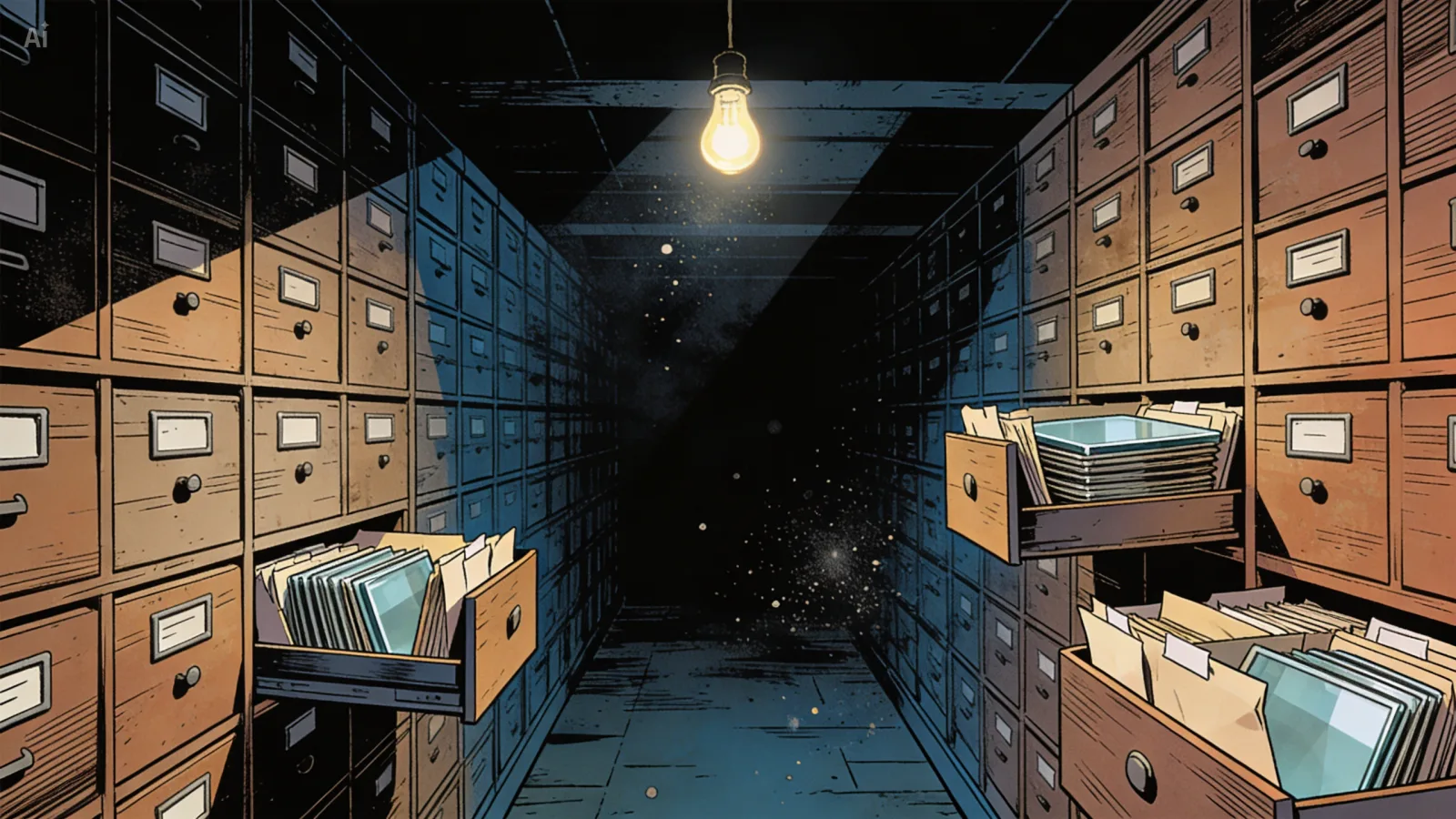
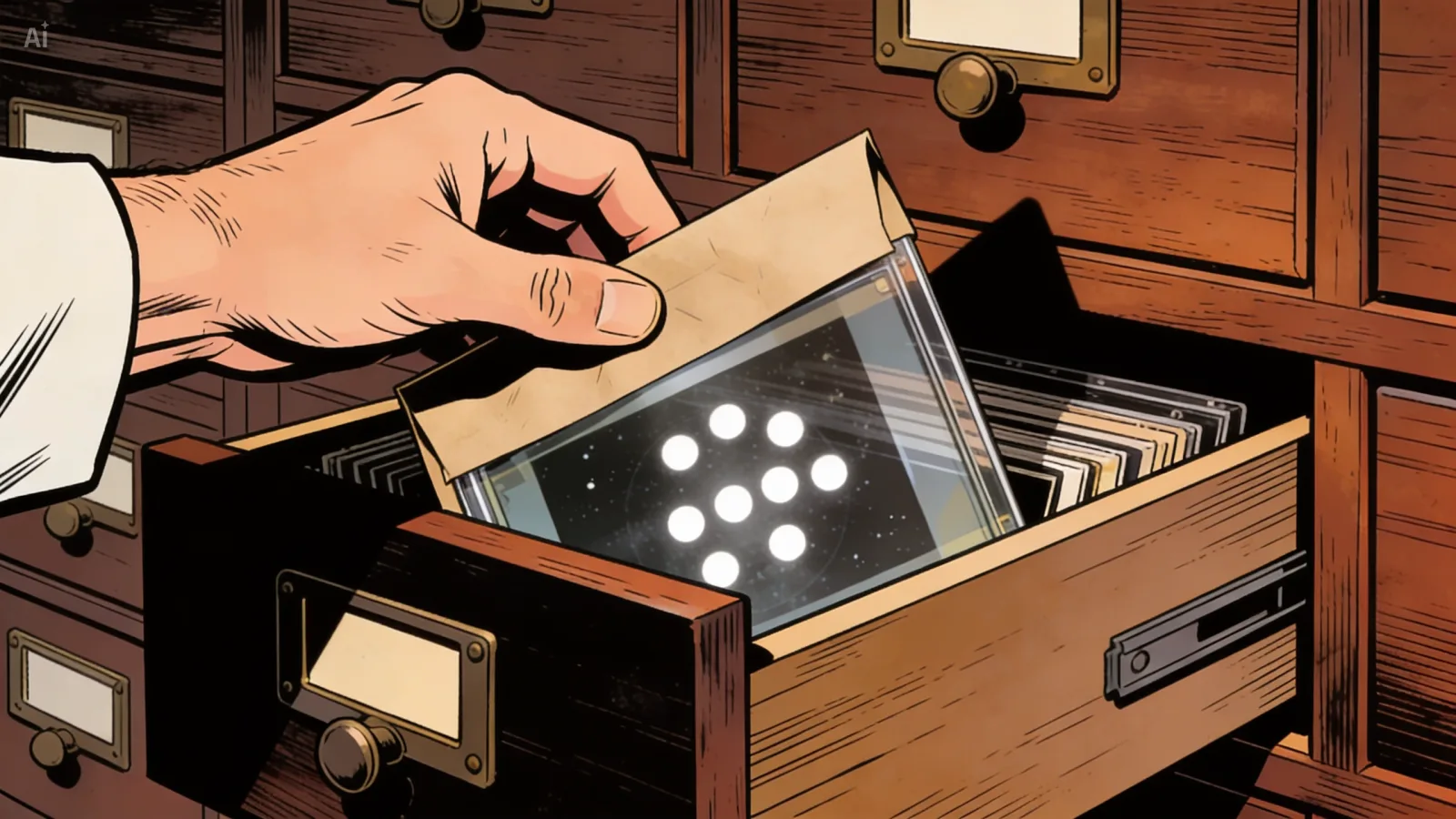
1,872 exposures will be taken; only 936 pairs will pass inspection. The survivors go into drawers where they will sleep for decades…
No one notices at the time, but there's a very strange anomaly…
70 years later.
Chapter 1
The Vanishing
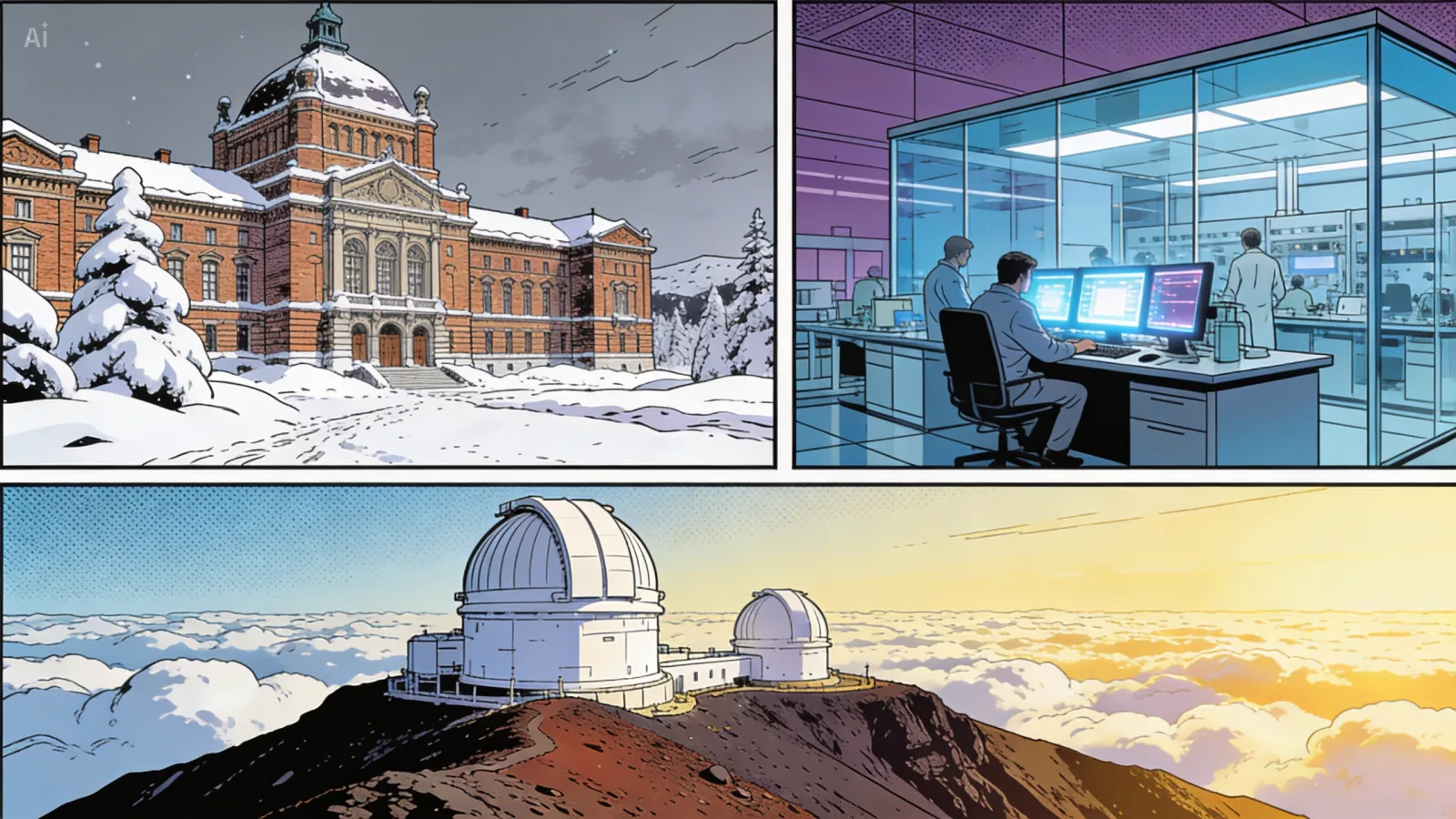
Uppsala · Zurich · The Canary Islands
From her laboratory at NORDITA in Stockholm, she studies the violent hearts of galaxies — quasars, black holes, things that burn.
Dr. Beatriz villarroel
The loud death.
Most massive stars die loud — a supernova so bright it can be seen across galaxies. Light. Heat. A funeral with fireworks.
The quiet death.
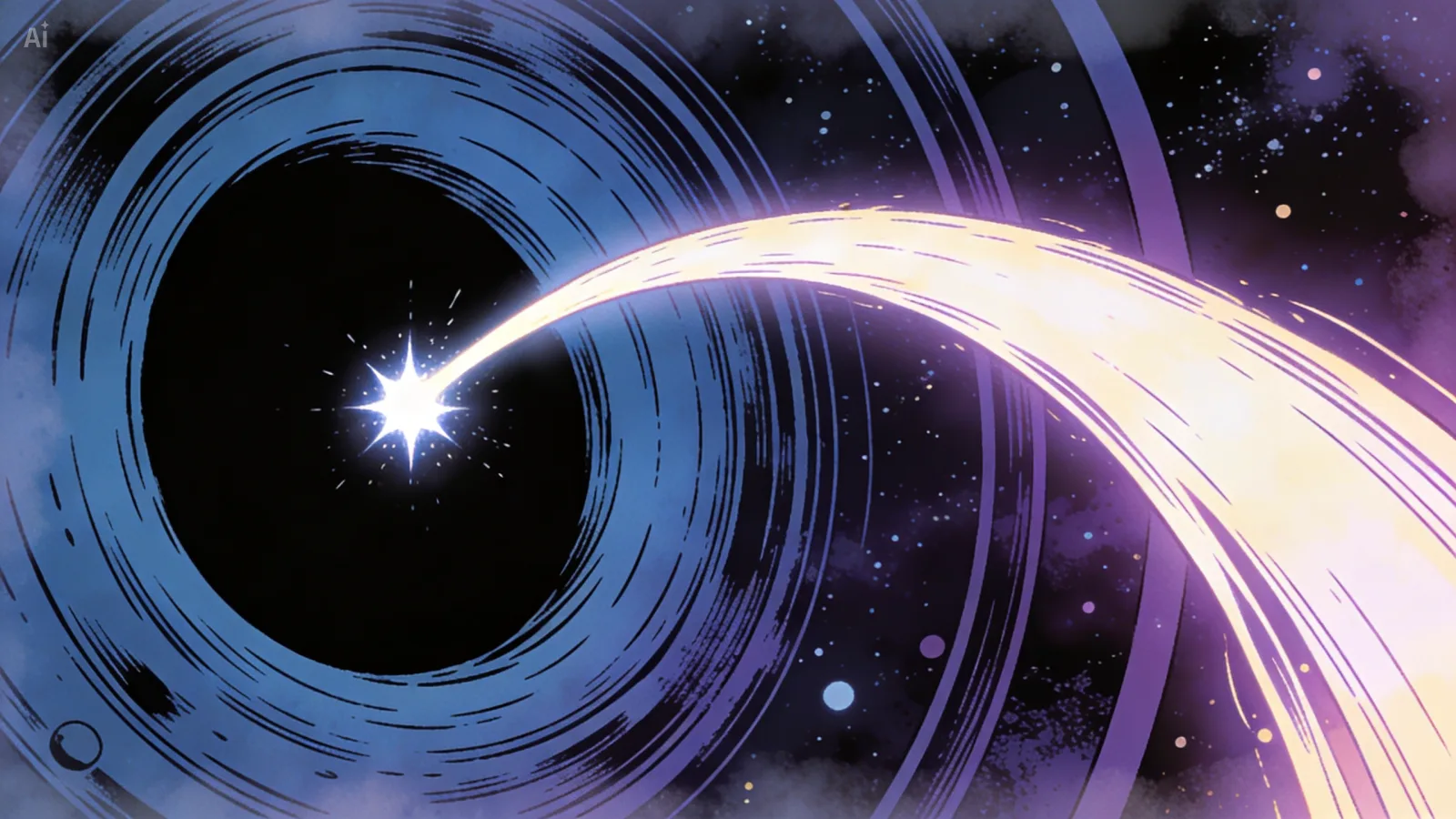
But what if one died quiet? Collapsed into a black hole without a flash? It would simply — vanish.
If a massive star collapses directly into a black hole — no supernova, no explosion — it would simply vanish from the record. Has anyone actually looked?
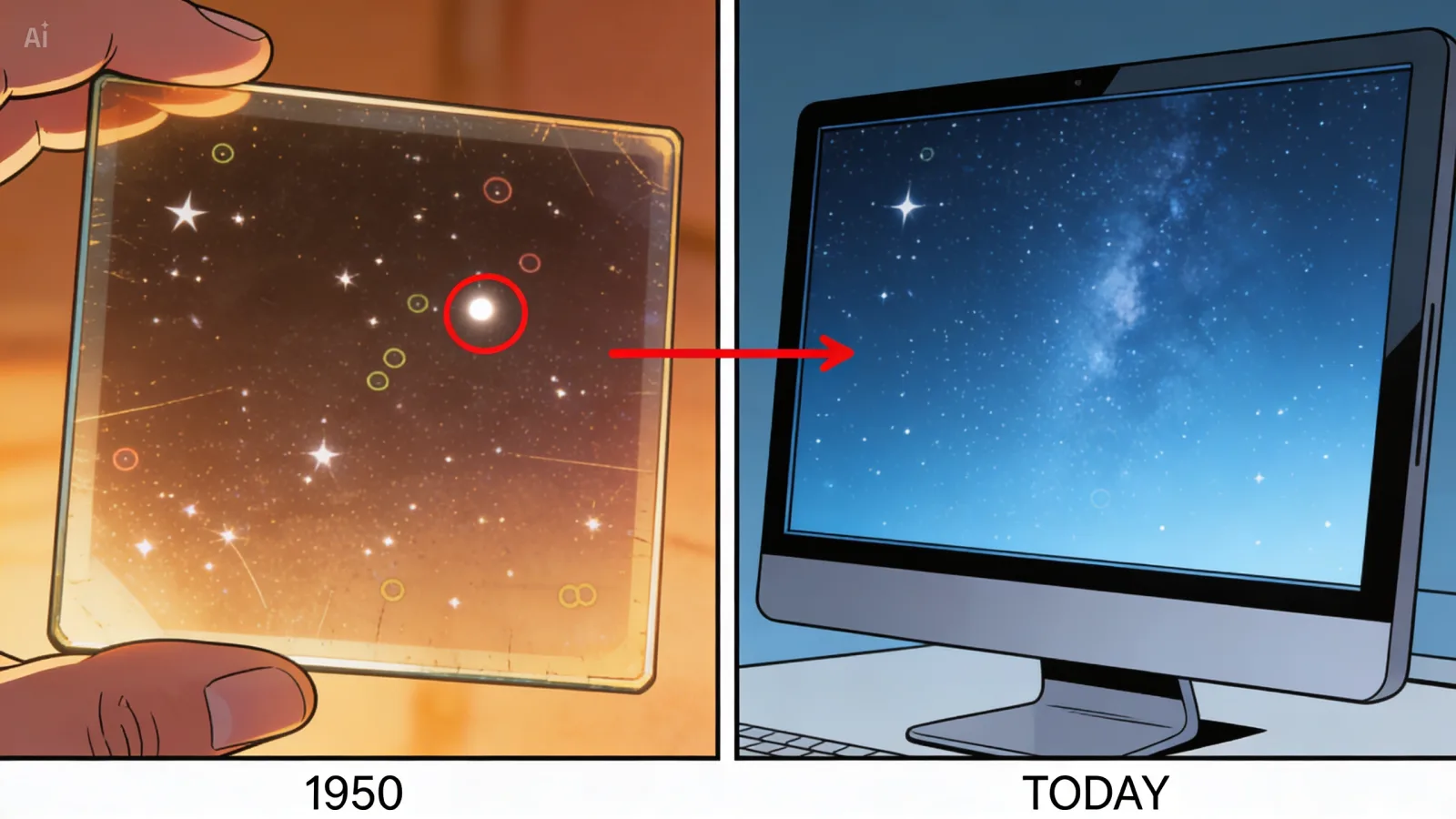
She proposes a research project: cross-match the sky as it was photographed in the 1950s with the sky as we see it today — and find the stars that have disappeared into black holes.
600 million objects.
She writes software to compare each speck of light in the 1950s sky with the sky we see today, looking for the ones that aren't there anymore.
Tenerife. Feb 2020.
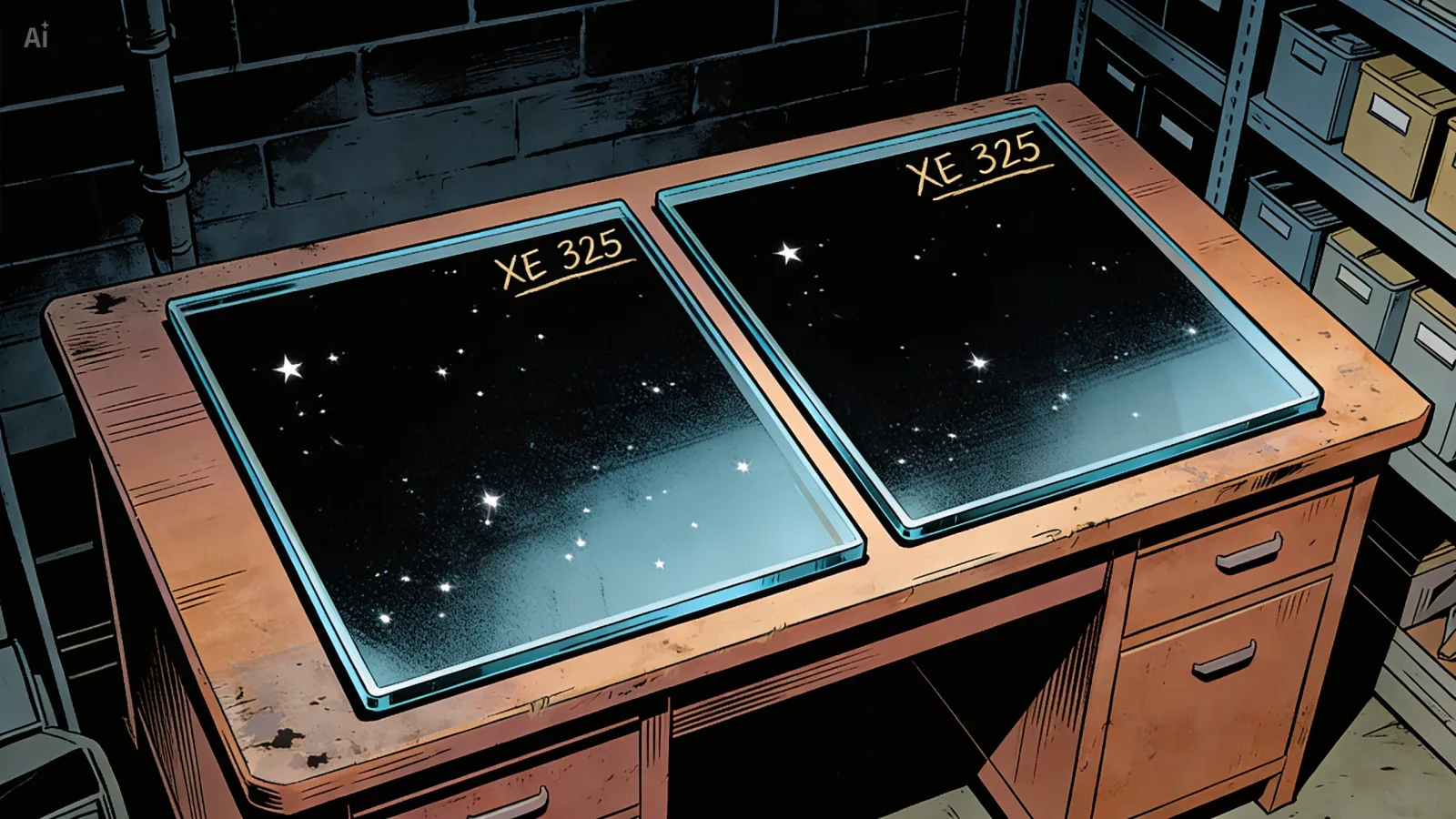
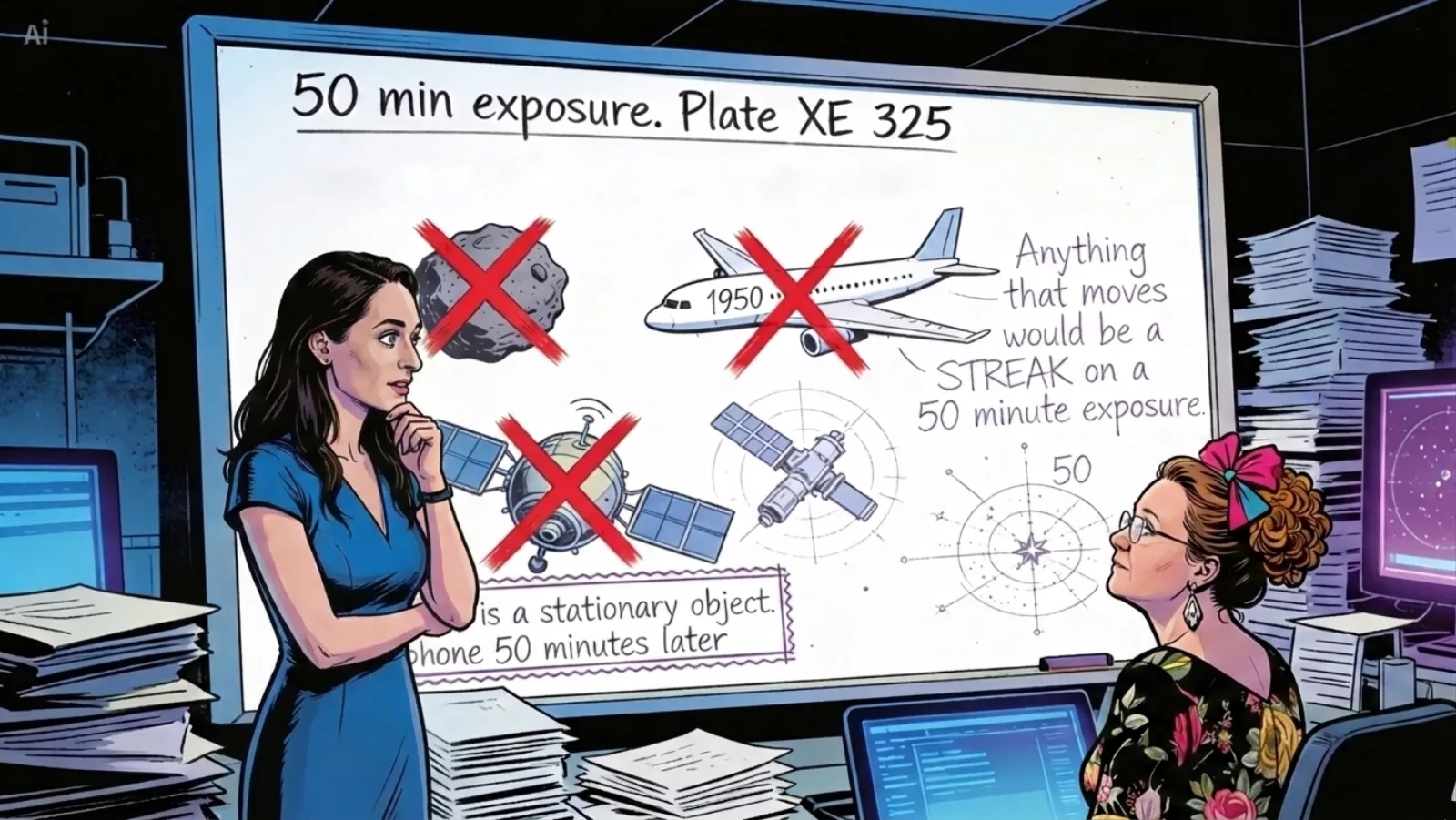
On her screen: Plate XE 325 — exposed at Palomar on April 12, 1950. The plate that went into the drawer.
Villarroel I was sitting there with my office mate in Spain... and I was just wondering, "So what is it? What are we seeing?" — Penn State, "My Personal Journey Through the Unknown"
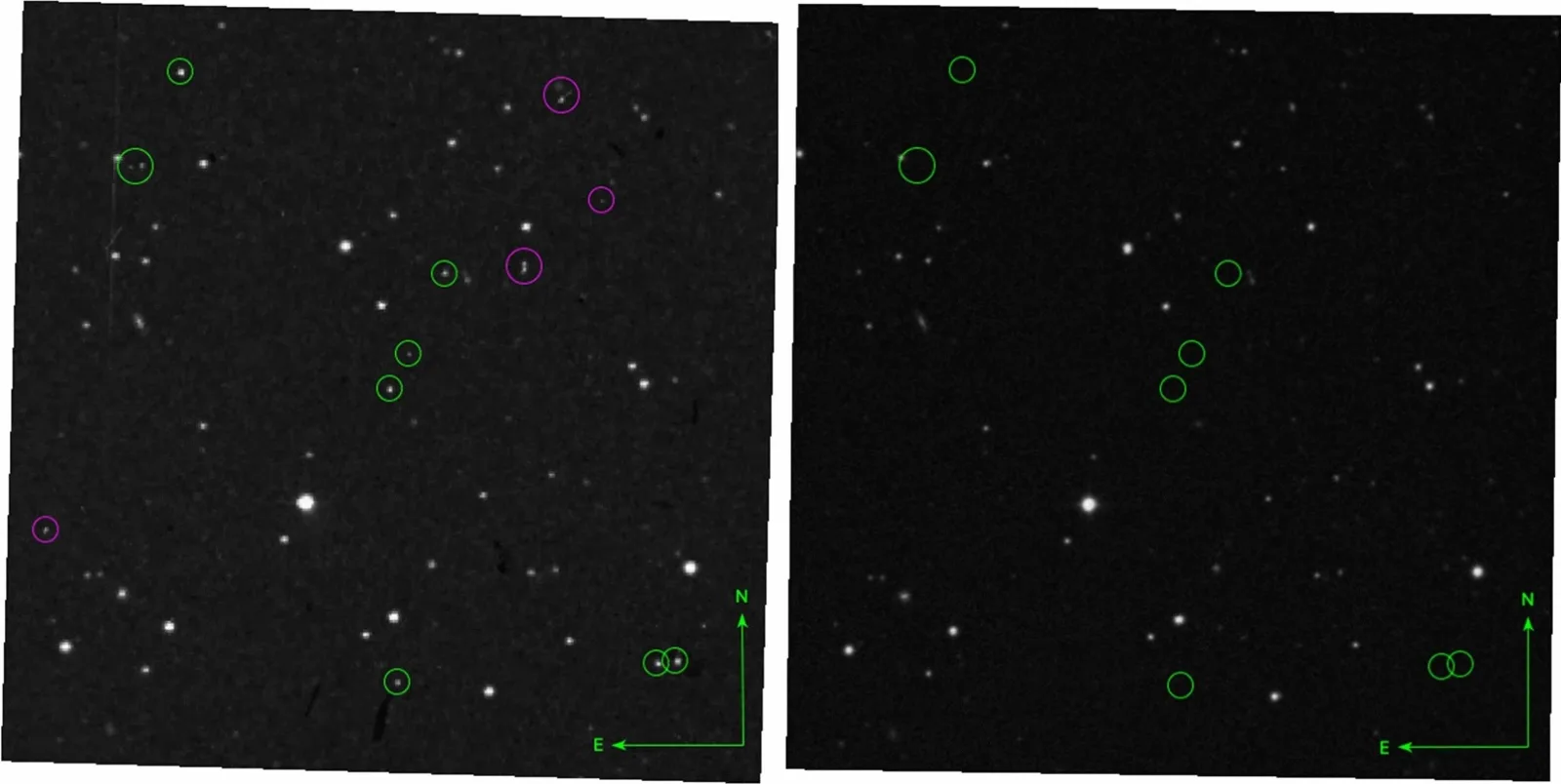
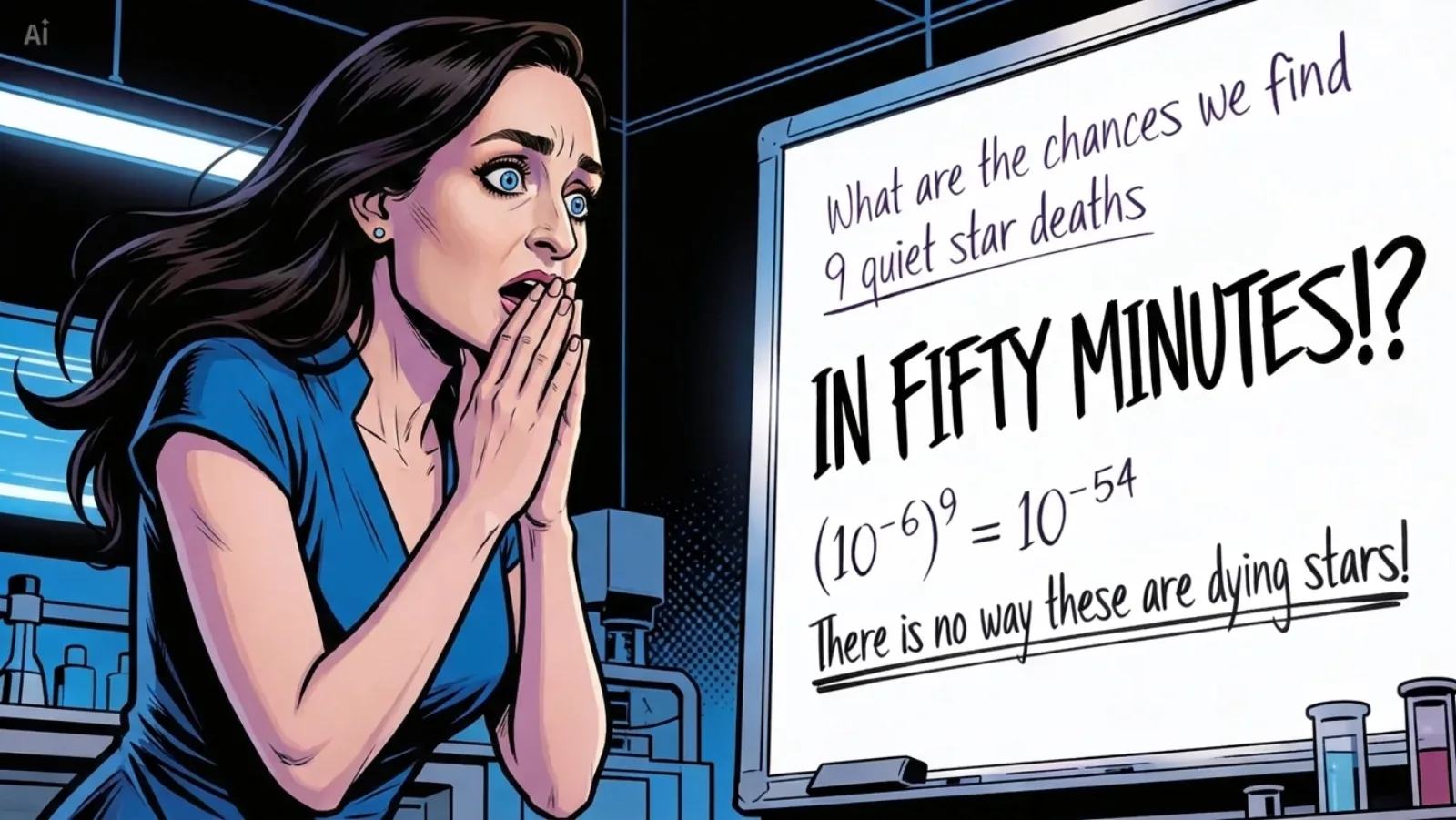
She sees them. Nine pinpoints of light. Clustered together on the red plate — completely absent on the blue companion plate taken thirty minutes earlier.
EXHIBIT A
Blink comparison of Plate XE 325 — nine transients on the red plate, gone on the blue.
Plate XE 325 · Palomar · 12 April 1950
Nine sources, clustered in a single patch of sky. They appear within half an hour on a fifty-minute red exposure — and are absent on the blue companion plate taken thirty minutes before. Absent, too, in every modern survey.
Whatever it was — it's gone.
Villarroel So what is it? What are we seeing?
What could they be?
Quietly dying stars?
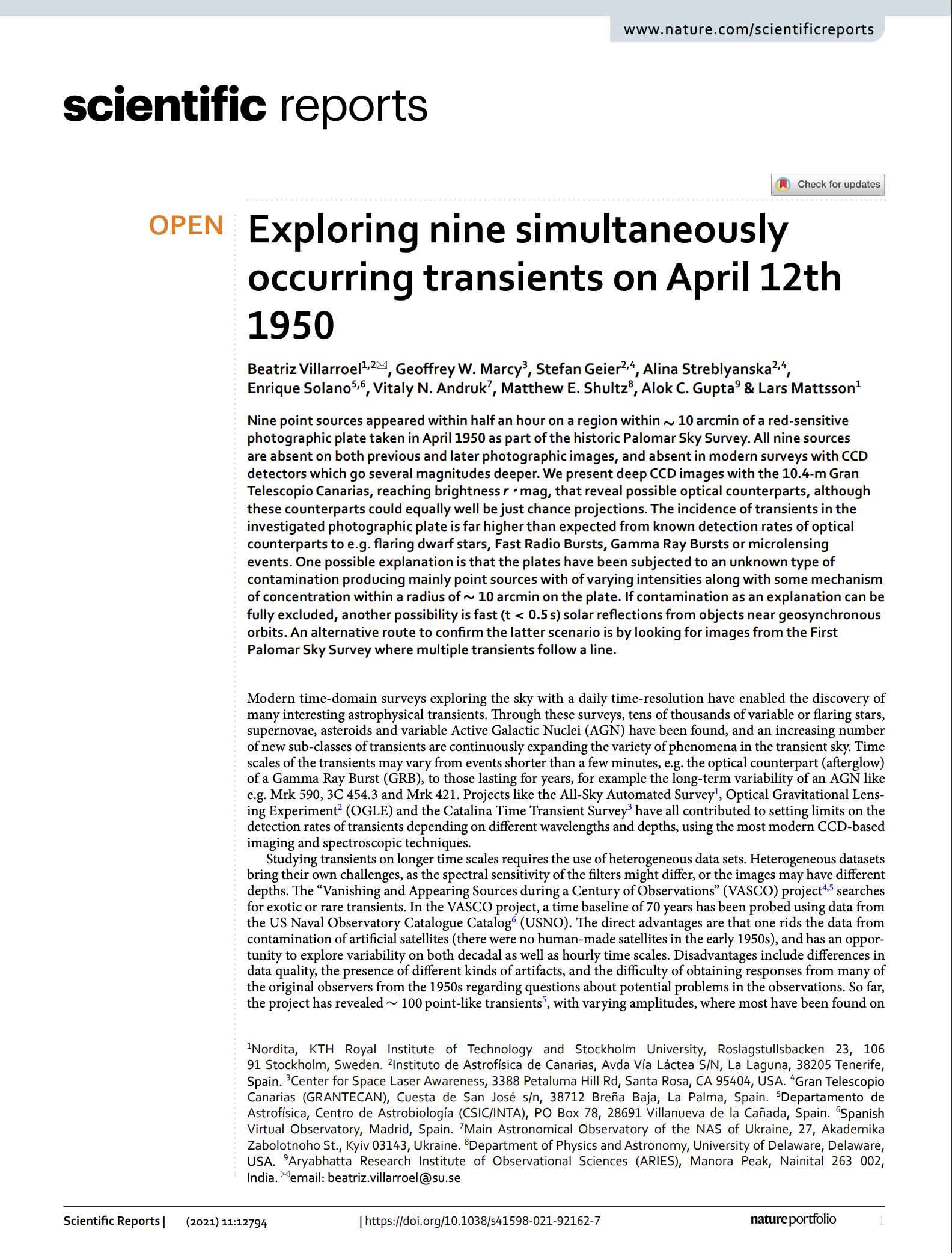
JUNE 2021 · PEER-REVIEWED · SCIENTIFIC REPORTS
THE DISCOVERY IS PUBLISHED
Transients
9
Window
½ hr
On a plate from
1950
Villarroel et al. (2021) · Scientific Reports
A simultaneous appearance of nine sources, never explained — now in the scientific literature for anyone to test.
Read the original paper at nature.com →
The Evidence
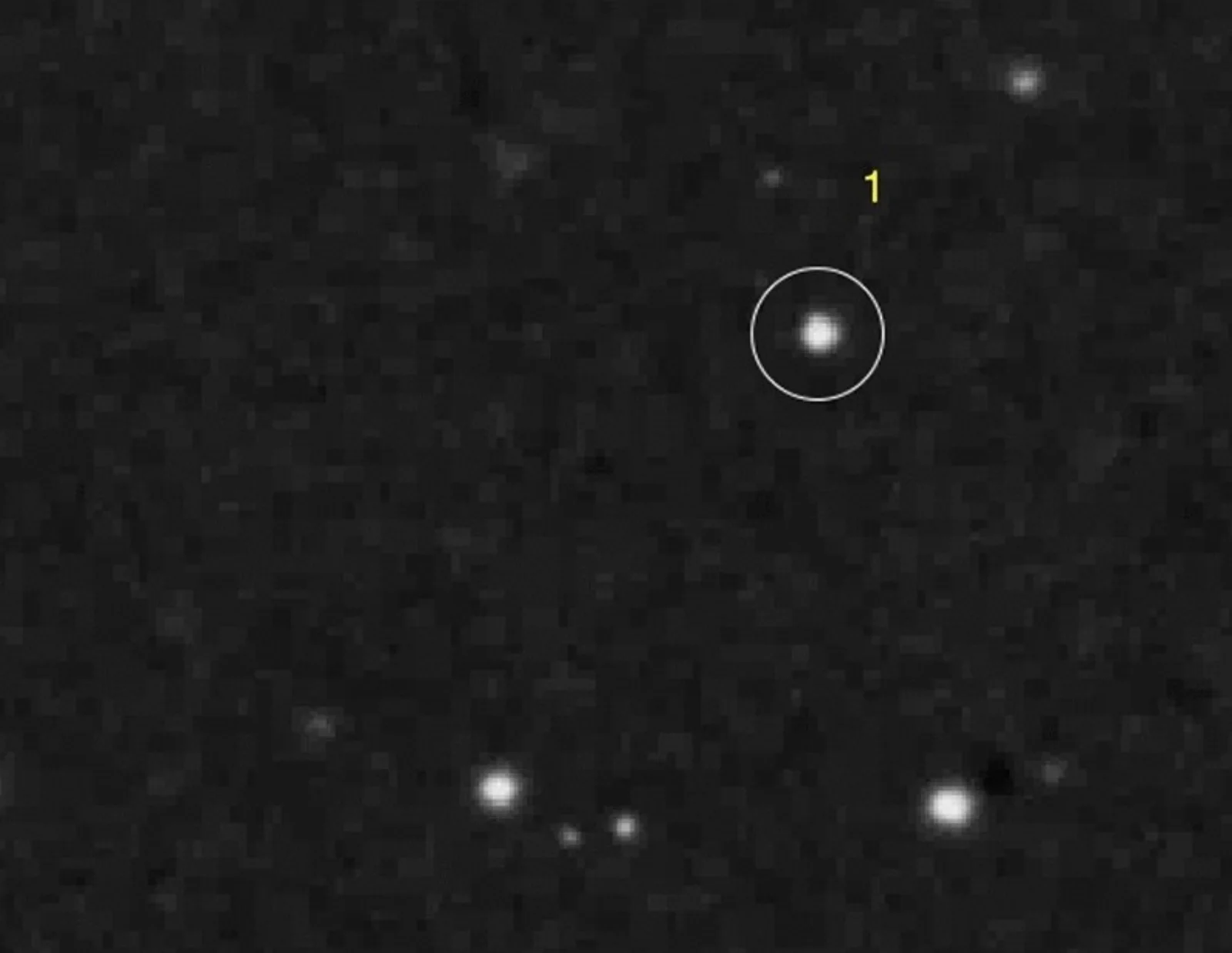
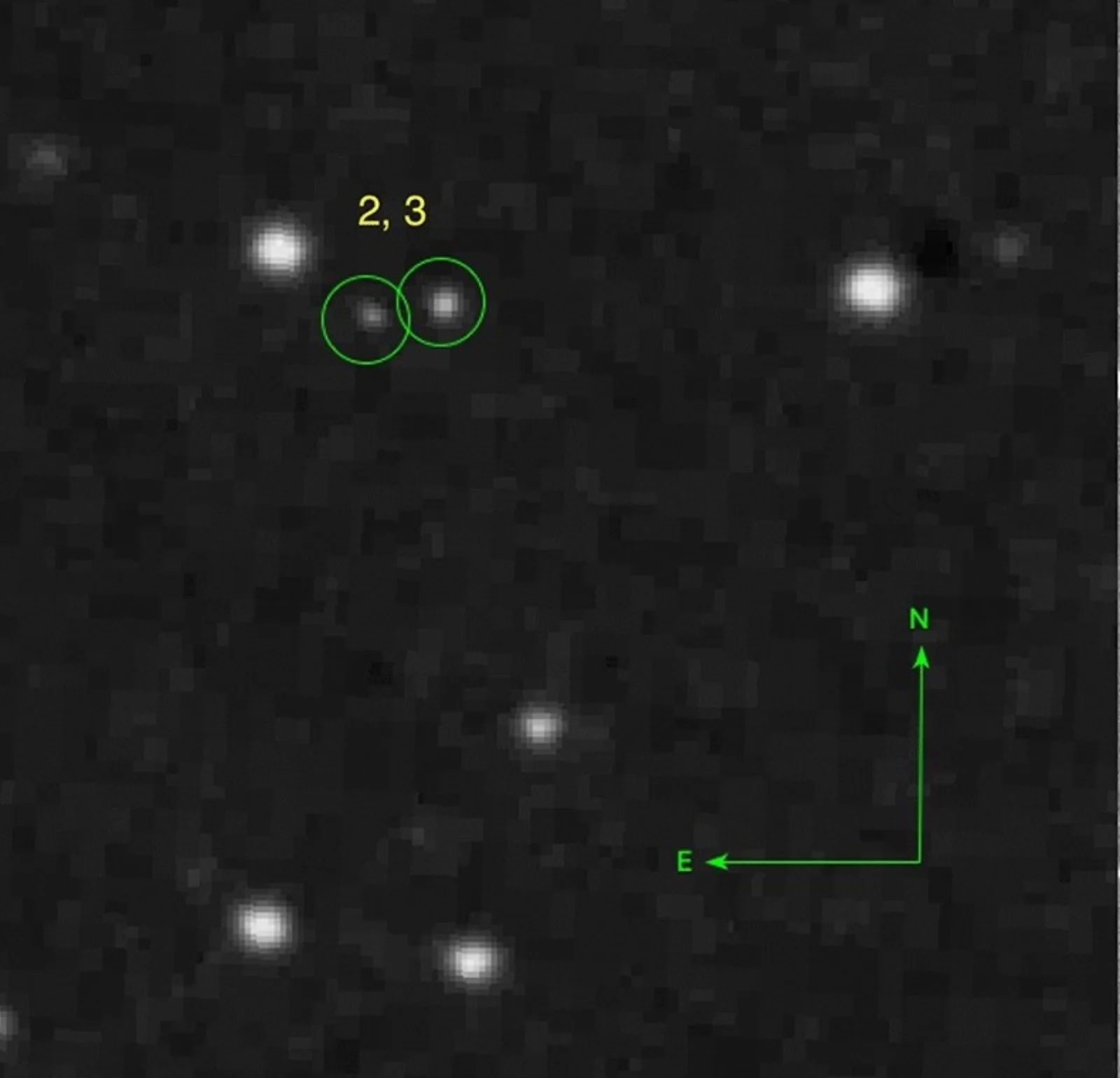
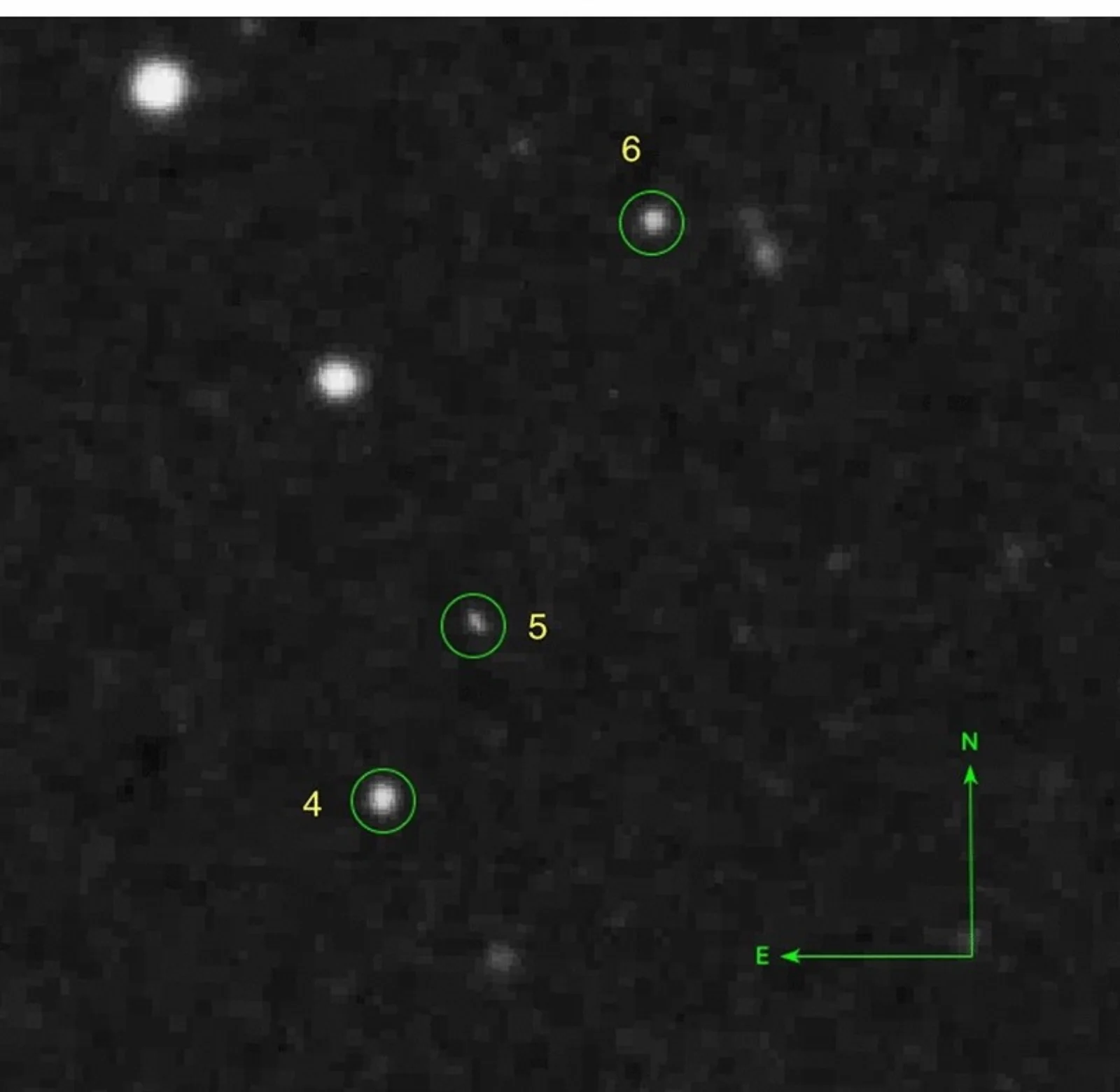
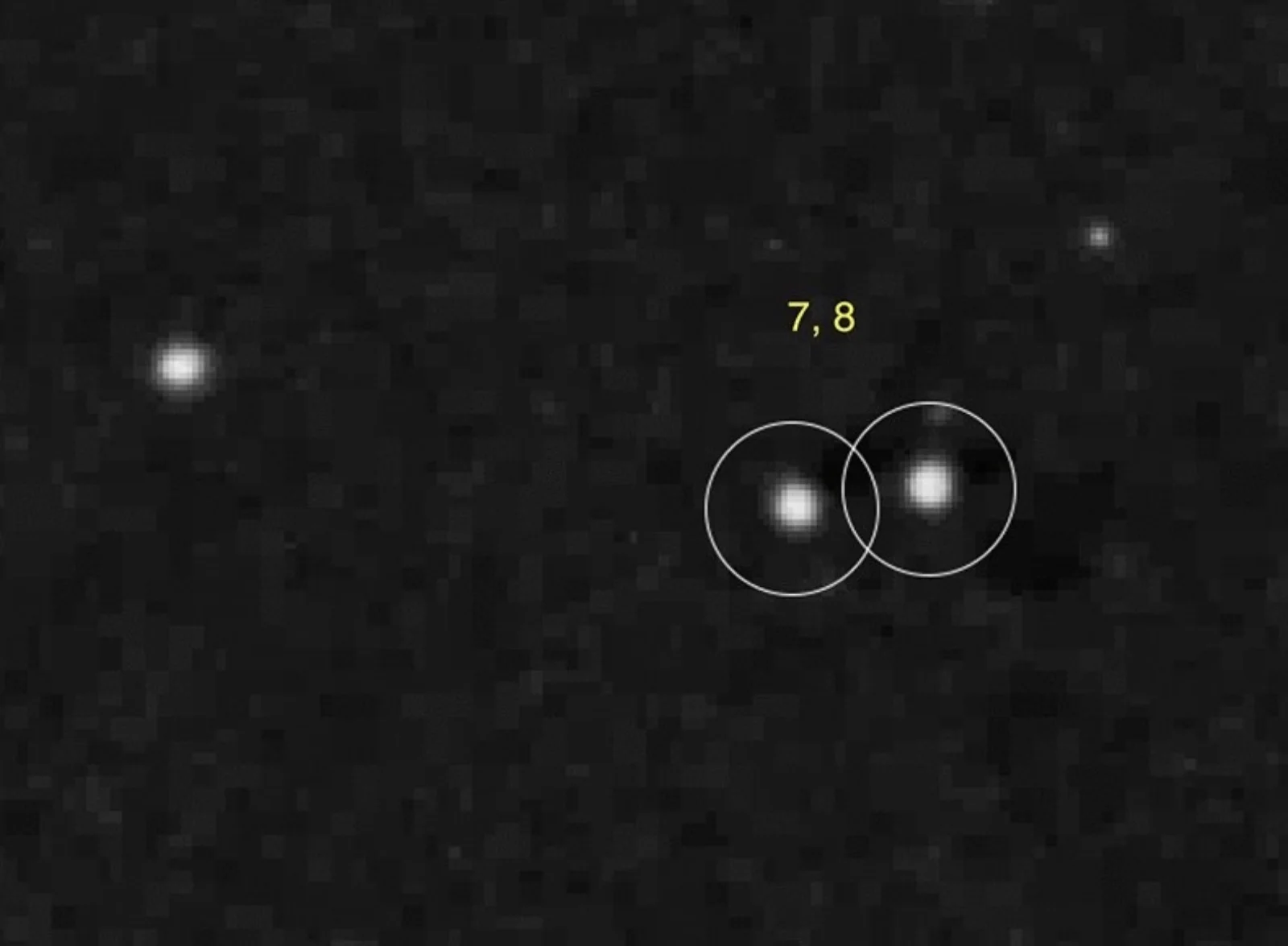
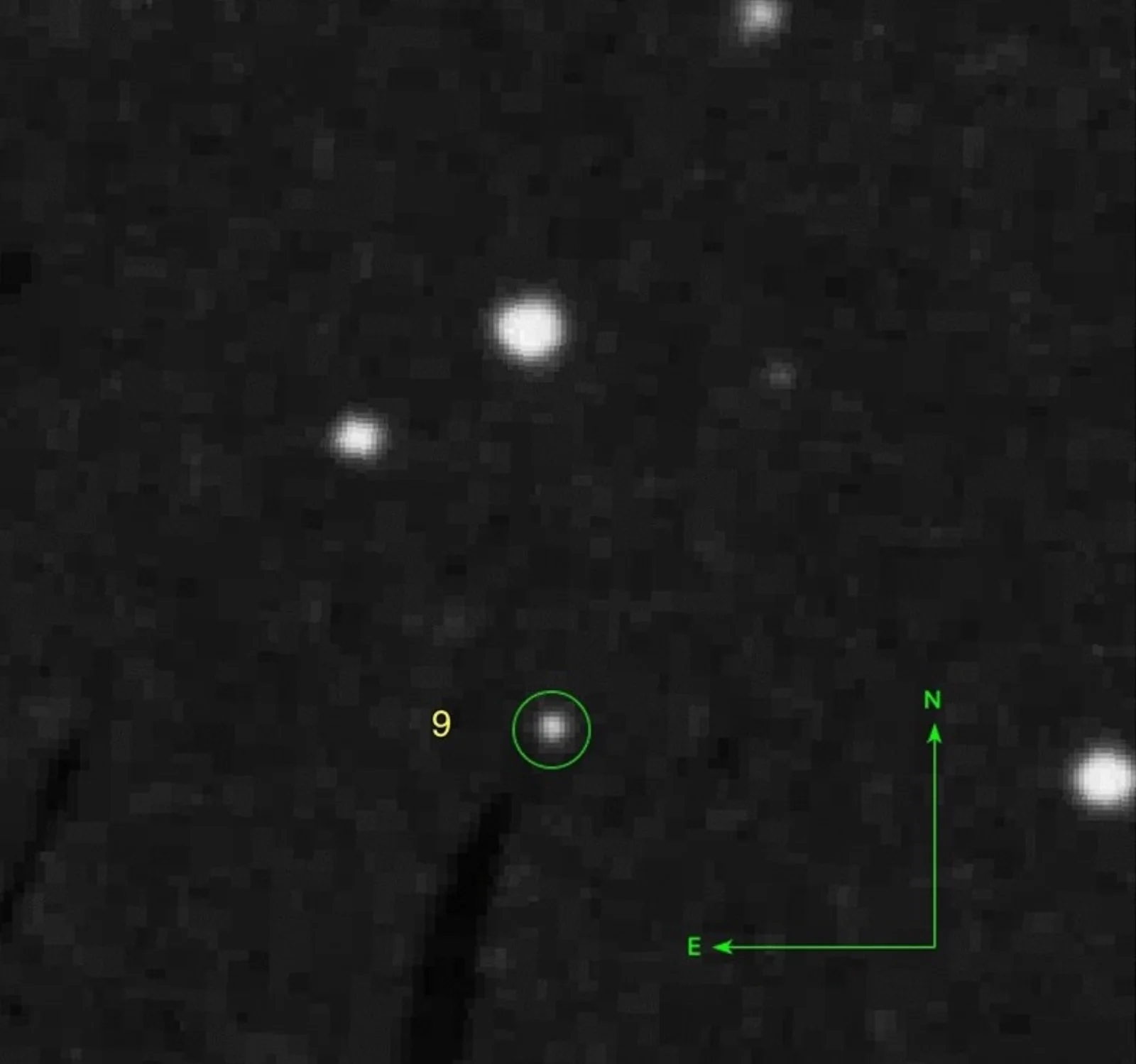
Nine point sources. Nine moments of light, photographed on a single mountain on a single night. Completely gone just moments later. Not there in modern images. Here they are, one by one.
TRANSIENT 1
TRANSIENTS 2 & 3
TRANSIENTS 4, 5, 6
TRANSIENTS 7 & 8
TRANSIENT 9
"No satellites are known to have existed prior to the Soviet-made Sputnik in 1957 — seven years after the appearance of the transients in... [this] image."— Villarroel et al. (2021), Scientific Reports · cutouts CC BY 4.0. Are they satellites? If so — there's a big problem.
Are they satellites? If so, there's a problem...
SO — WHAT ARE WE DEALING WITH?
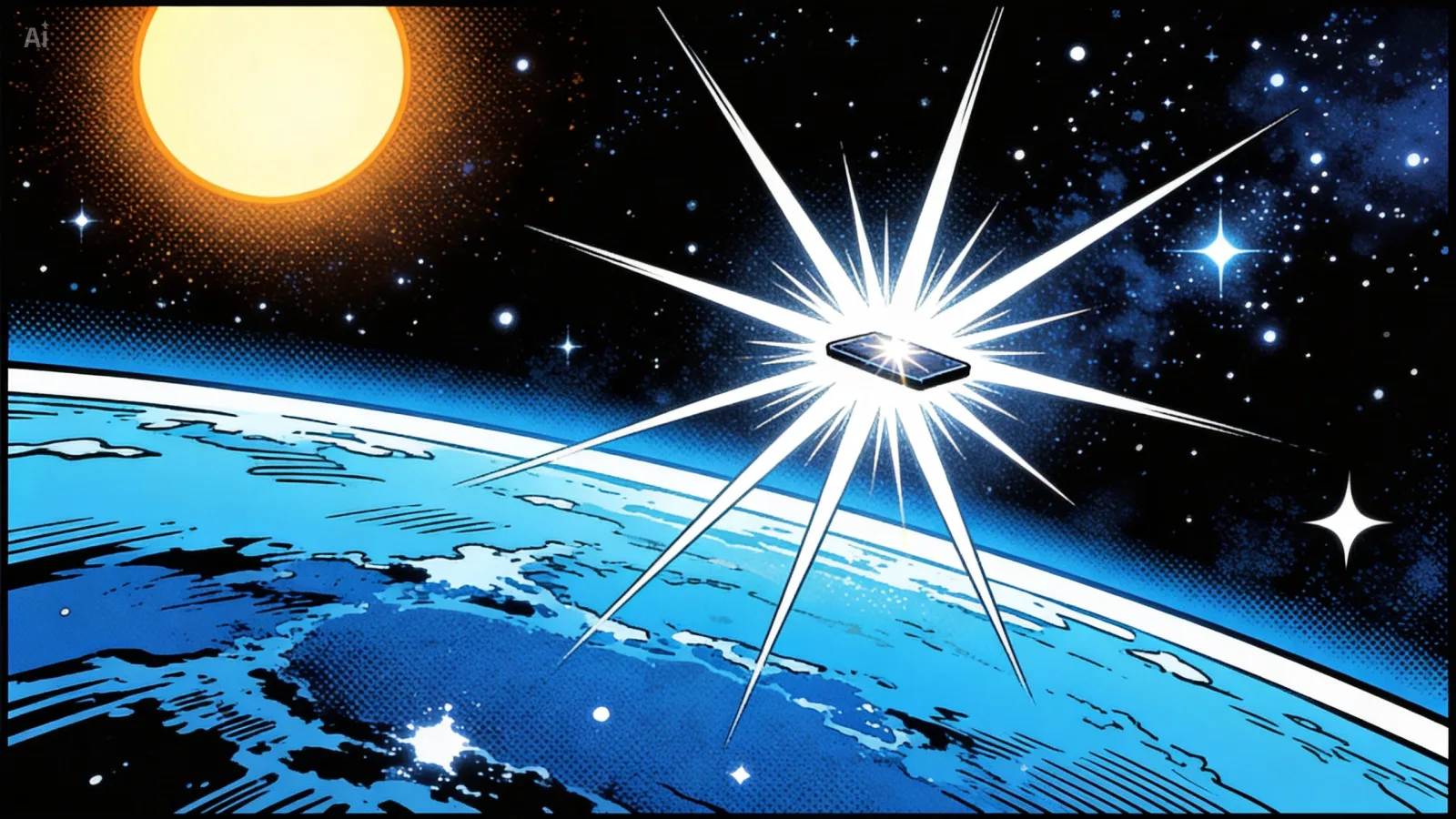
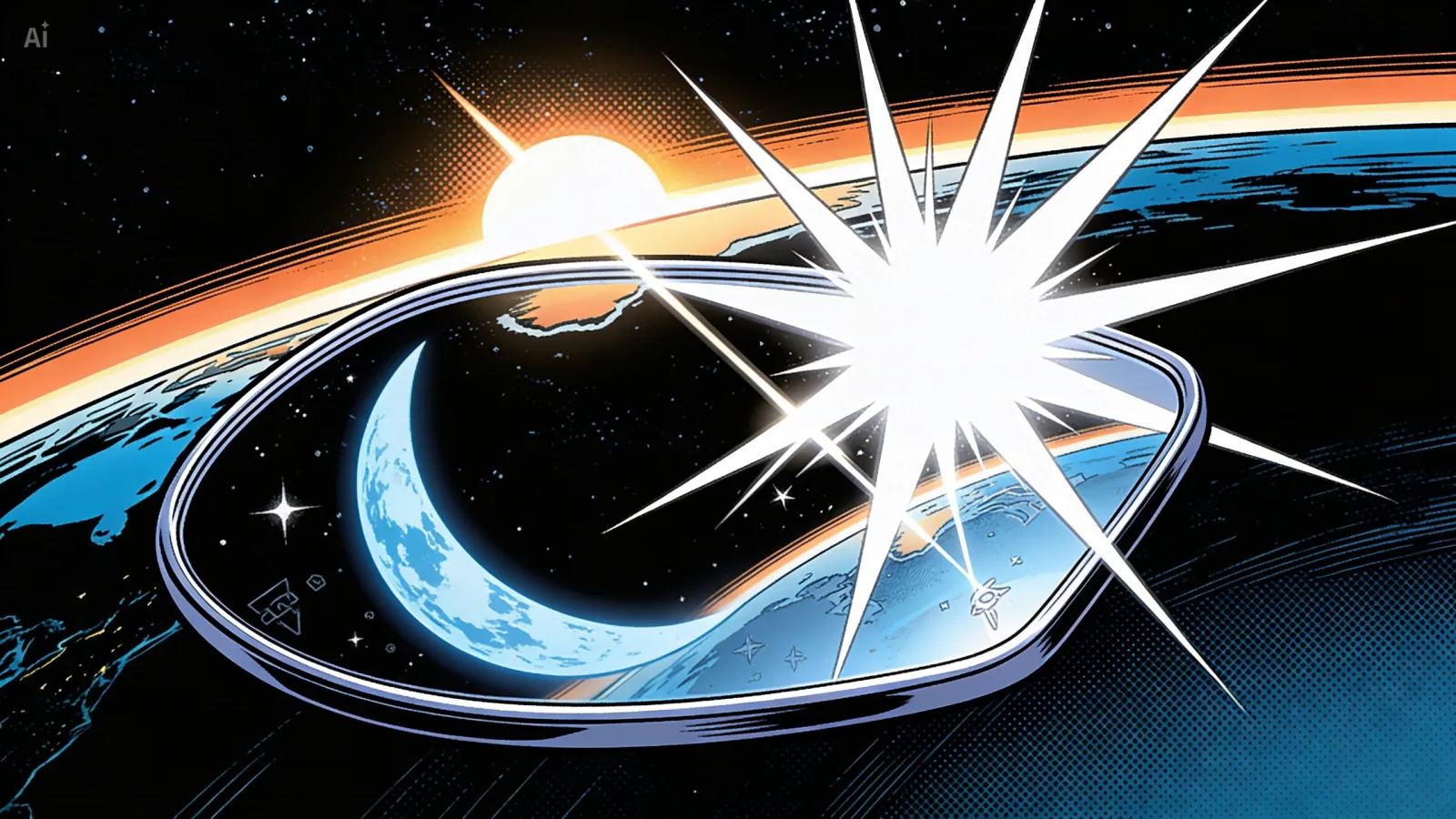
Speculative rendering: a brilliant specular flash of sunlight glinting off a small object in near-Earth orbit.
"…more likely explained by a Solar system satellite of artificial or natural origin."— Villarroel et al., Scientific Reports, 2021 — citing a precedent on a similar anomalous transient.
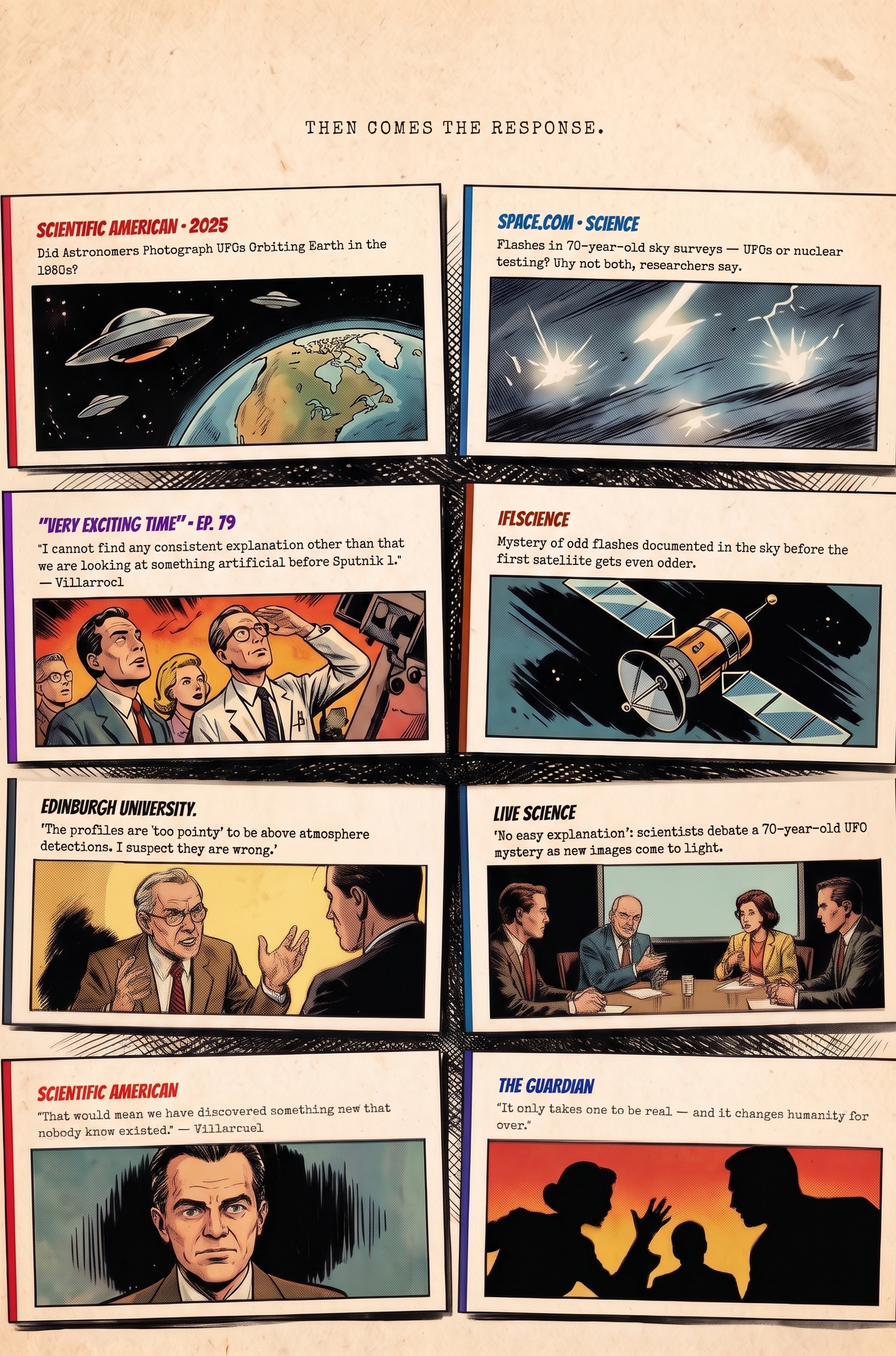
Scientific American · 2025
Did Astronomers Photograph UFOs Orbiting Earth in the 1950s?
SPACE.com · Science
Flashes in 70-year-old sky surveys — UFOs or nuclear testing? Why not both, researchers say.
"Very Exciting Time" · Ep. 79
"I cannot find any consistent explanation other than that we are looking at something artificial before Sputnik 1." — Villarroel
IFLScience
Mystery of odd flashes documented in the sky before the first satellite gets even odder.
Not everyone is convinced
"The profiles are too 'pointy' to be above-atmosphere detections. I suspect they are wrong." — Dr. Nigel Hambly
Live Science
"No easy explanation": scientists debate a 70-year-old UFO mystery as new images come to light.
Scientific American
"That would mean we have discovered something new that nobody knew existed." — Villarroel
The Guardian
"It only takes one to be real — and it changes humanity for ever."
After the paper, the search opens up.
Thirty volunteers · six countries · fifteen thousand image pairs
She recruits thirty volunteers from six countries — not astronomers, just careful eyes — and teaches them to look. Together they examine fifteen thousand image pairs. 

The nine transients on Plate XE 325 weren't a fluke. The catalog grows.
A bold claim is not enough. The science has to hold.
Chapter 2
The Shadow Test
Dr. Nigel Hambly, Royal Observatory Edinburgh.
Dr. Nigel Hambly, Royal Observatory Edinburgh. 
Hambly's argument: some of these "transients" may not be sky at all — dust, emulsion holes, fibres, defects in the glass copies, picked up at high resolution and indistinguishable from real stars.
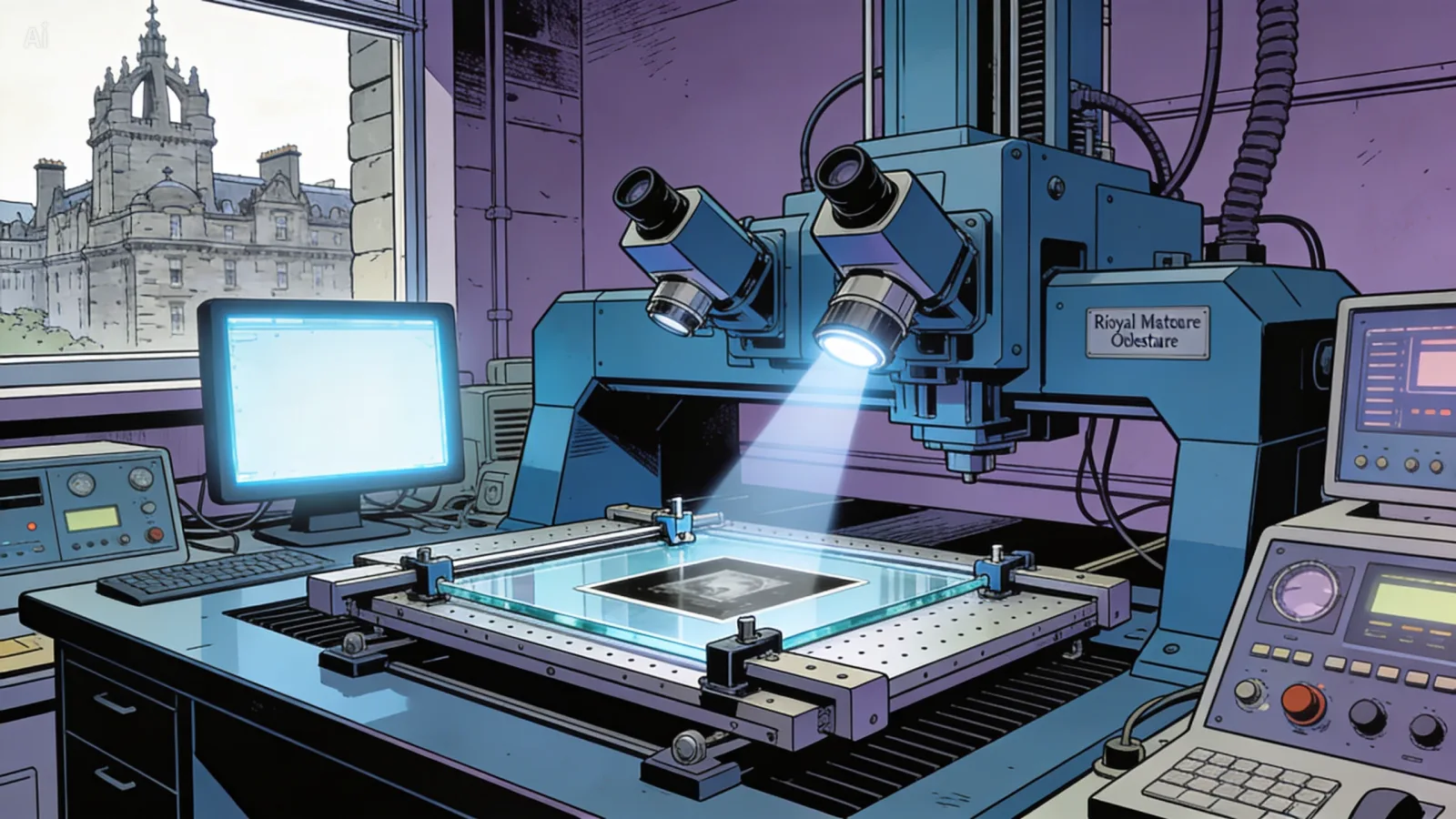
The SuperCOSMOS plate-measuring machine, Edinburgh.
SuperCOSMOS — the Royal Observatory's plate-measuring machine. It scanned the POSS-I plates, and it's the scan Villarroel relies on for the close-ups of her nine transients.
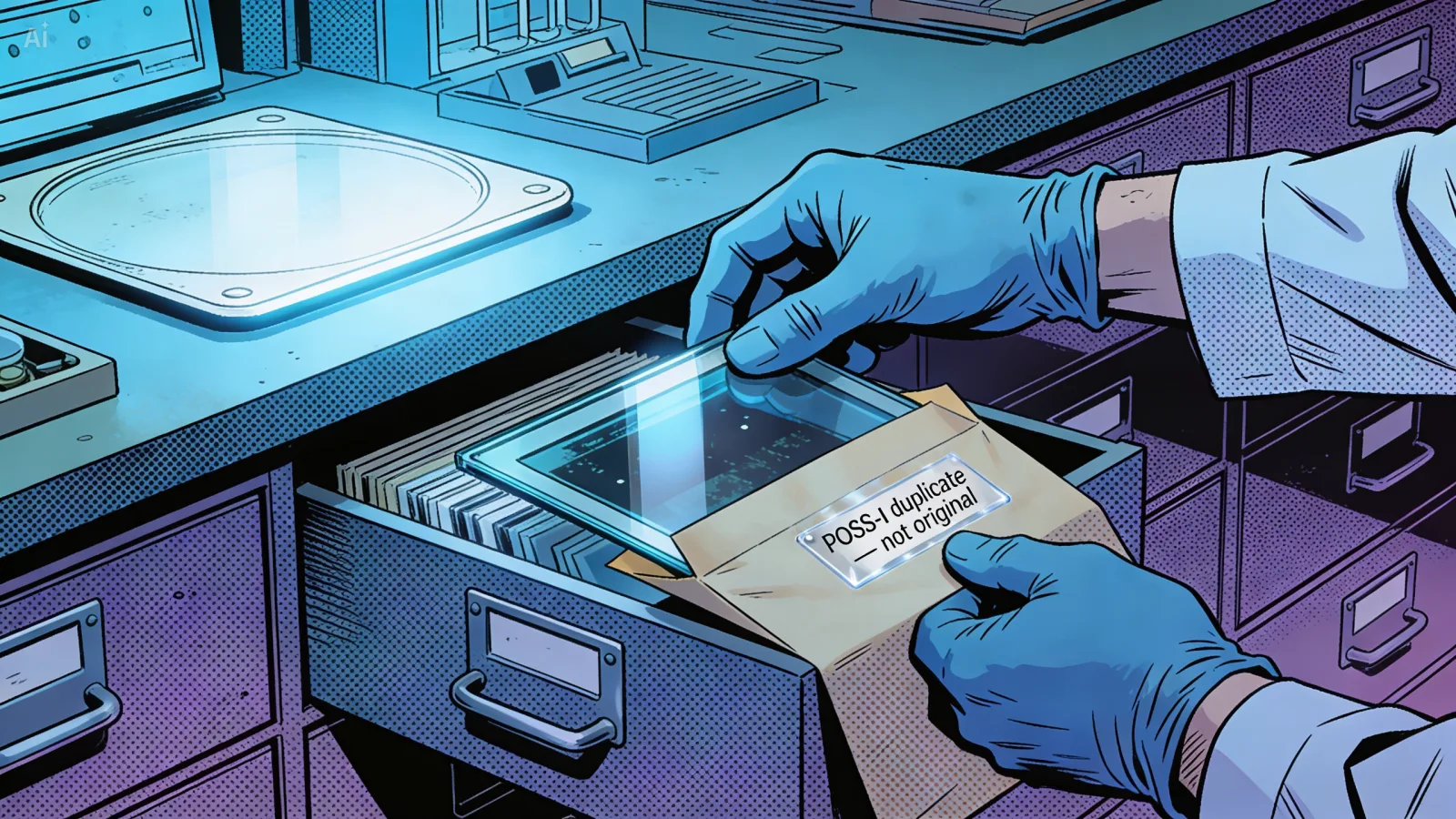
Glass duplicate plates — second-generation contact copies.
But SuperCOSMOS never scanned the originals — only glass duplicates. 
The original plates still sleep in their drawers at Palomar.
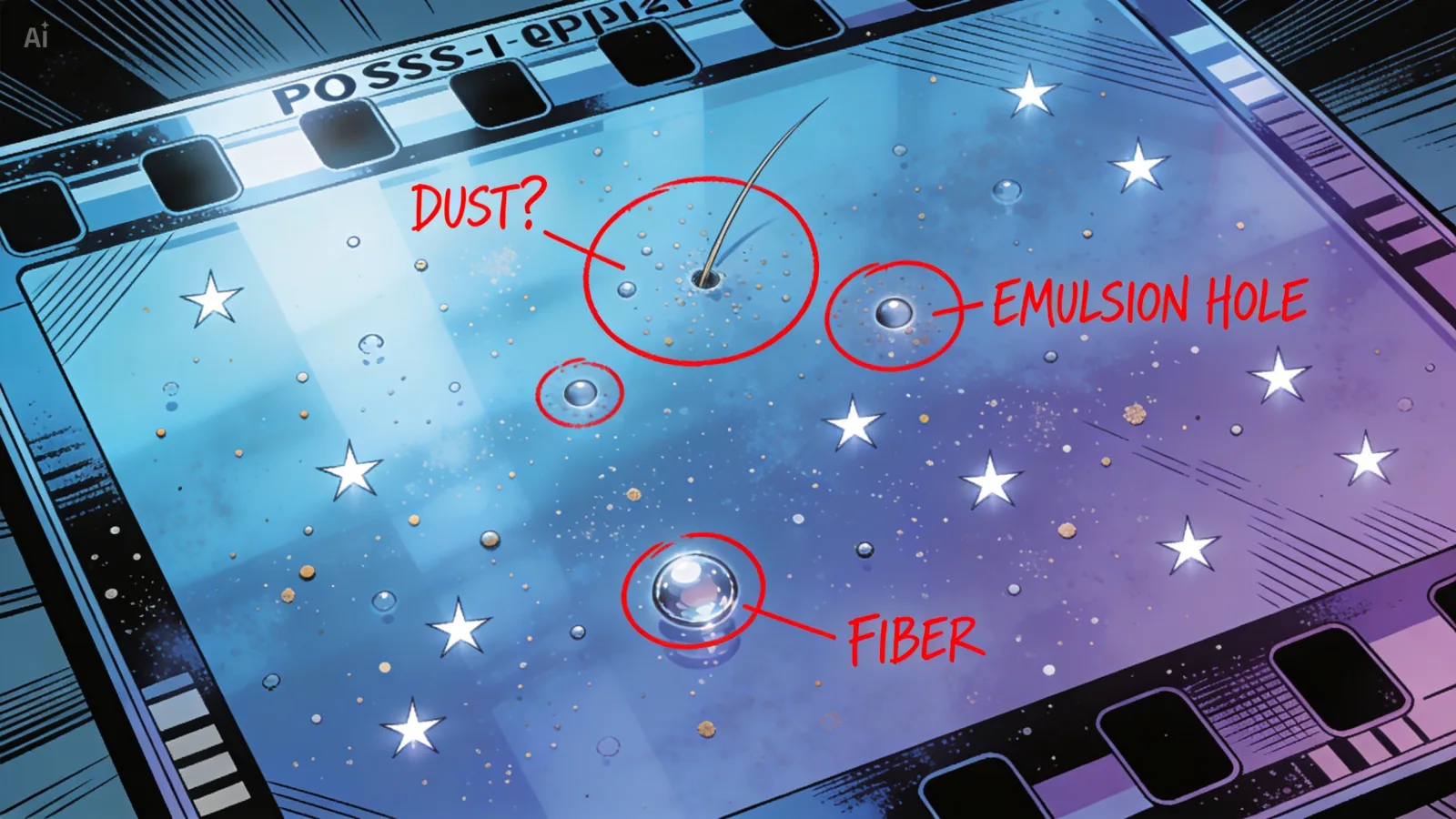
DEFECTS, NOT STARS?
Macro close-up of a glass POSS-I duplicate plate: dust grains, emulsion pinholes and fibres scattered across the surface, indistinguishable from recorded stars.
Under high magnification the glass copies are full of dust, pinholes and fibres — each one a potential false "star."
Dr. Nigel Hambly in his laboratory at the Royal Observatory Edinburgh.
"There'd be nobody happier than me if they are right. But I suspect they are wrong."— Dr. Nigel Hambly, Royal Observatory Edinburgh
Tens of thousands of POSS-I plate cut-outs, each dense with stars and short-lived points of light.
HER SOLUTION — A TEST TO PROVE THEY ARE REAL
By now Villarroel’s catalogue has grown well beyond the original nine — over 100,000 short-lived transients. What are they?
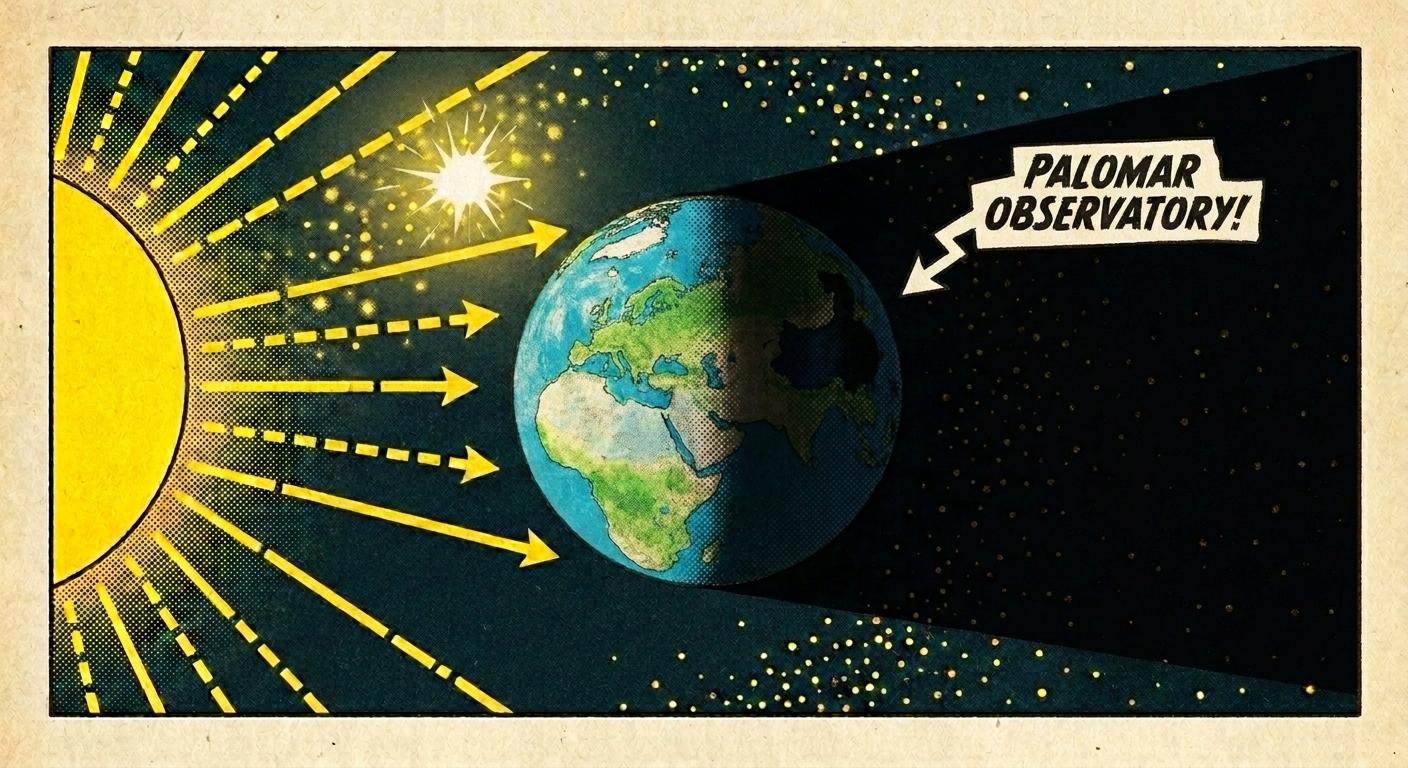
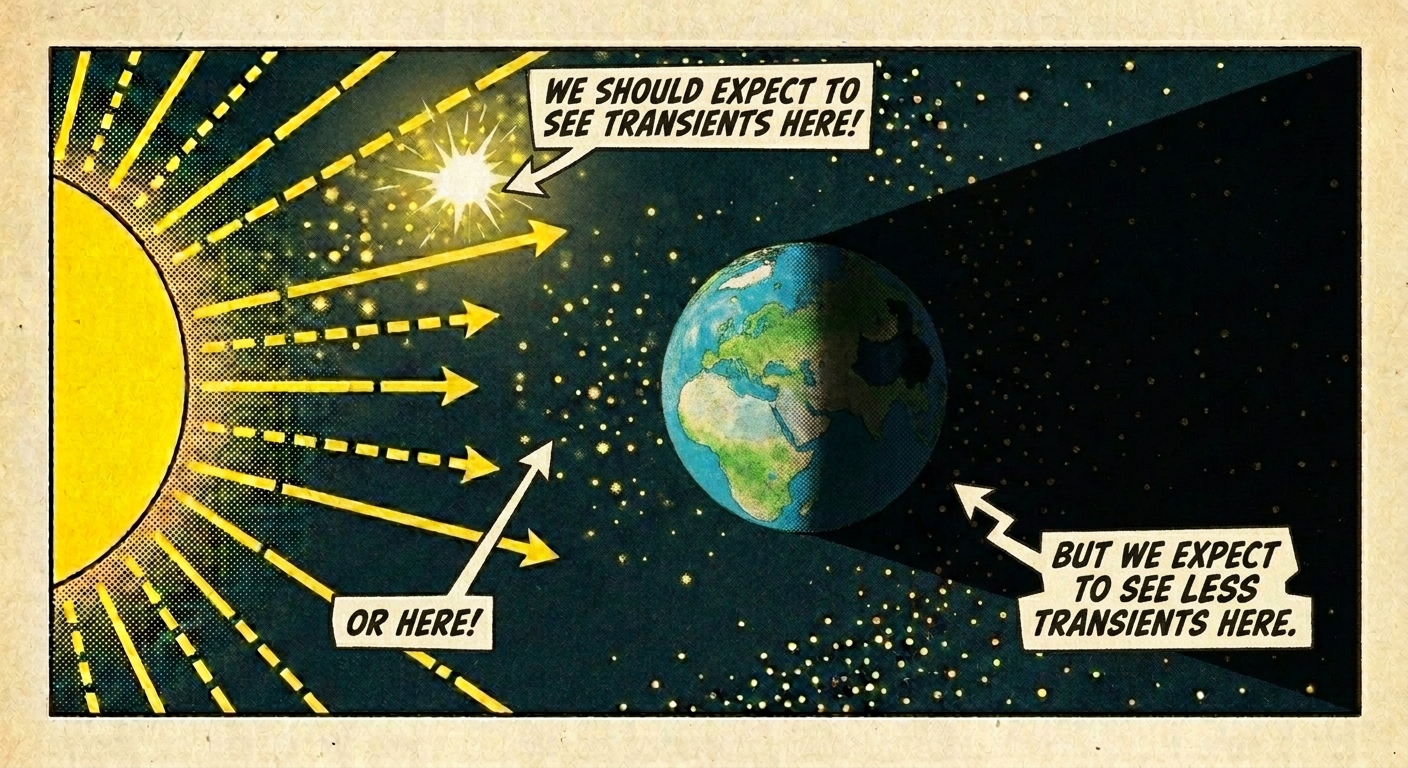
Comic diagram: the Sun at left, Earth in the middle, its shadow stretching right to where Palomar Observatory watches.
Earth always casts a shadow into space — and Palomar watches from within it.
Comic diagram: we expect transients in the sunlit zones and far fewer inside Earth’s shadow.
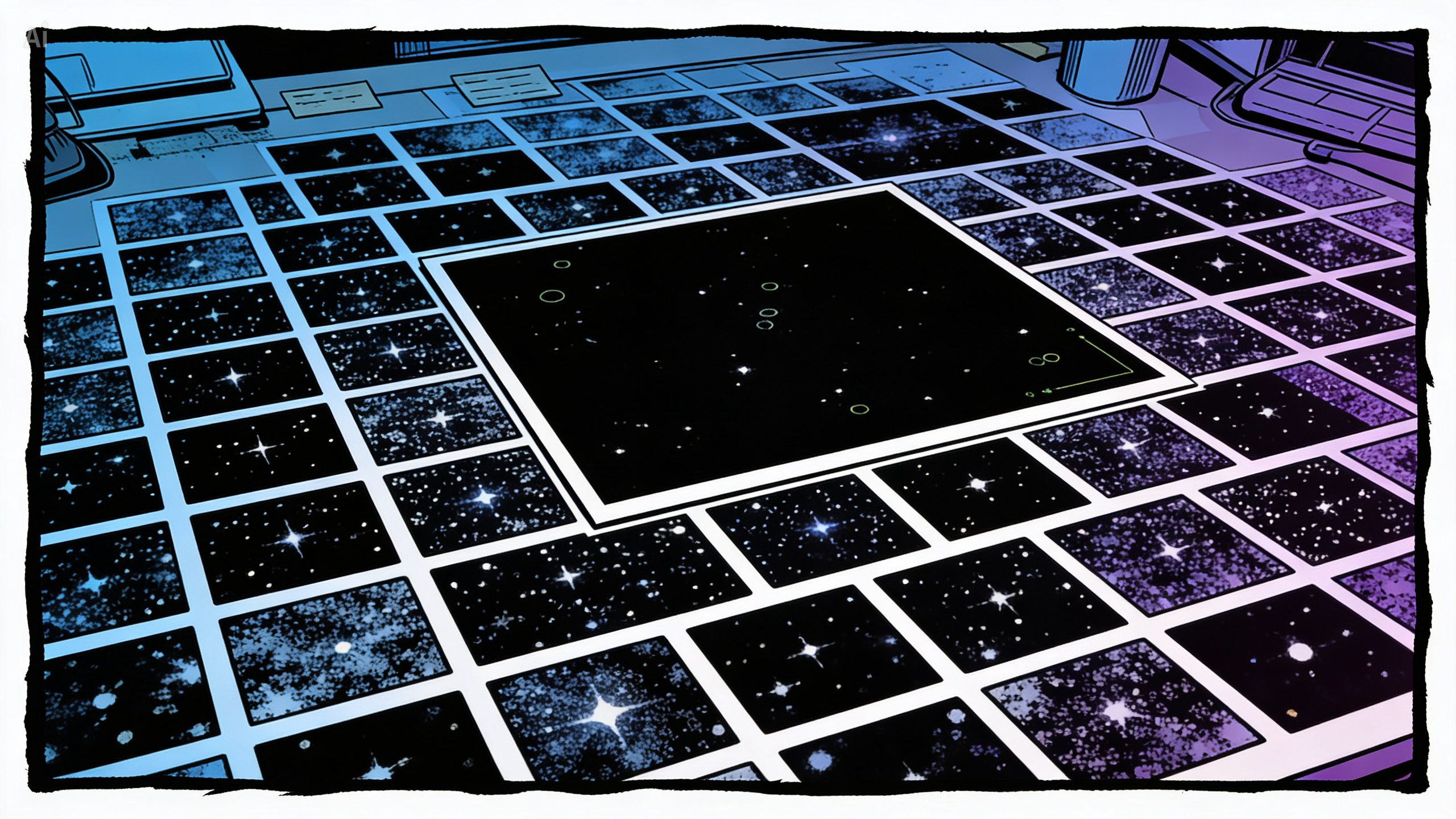
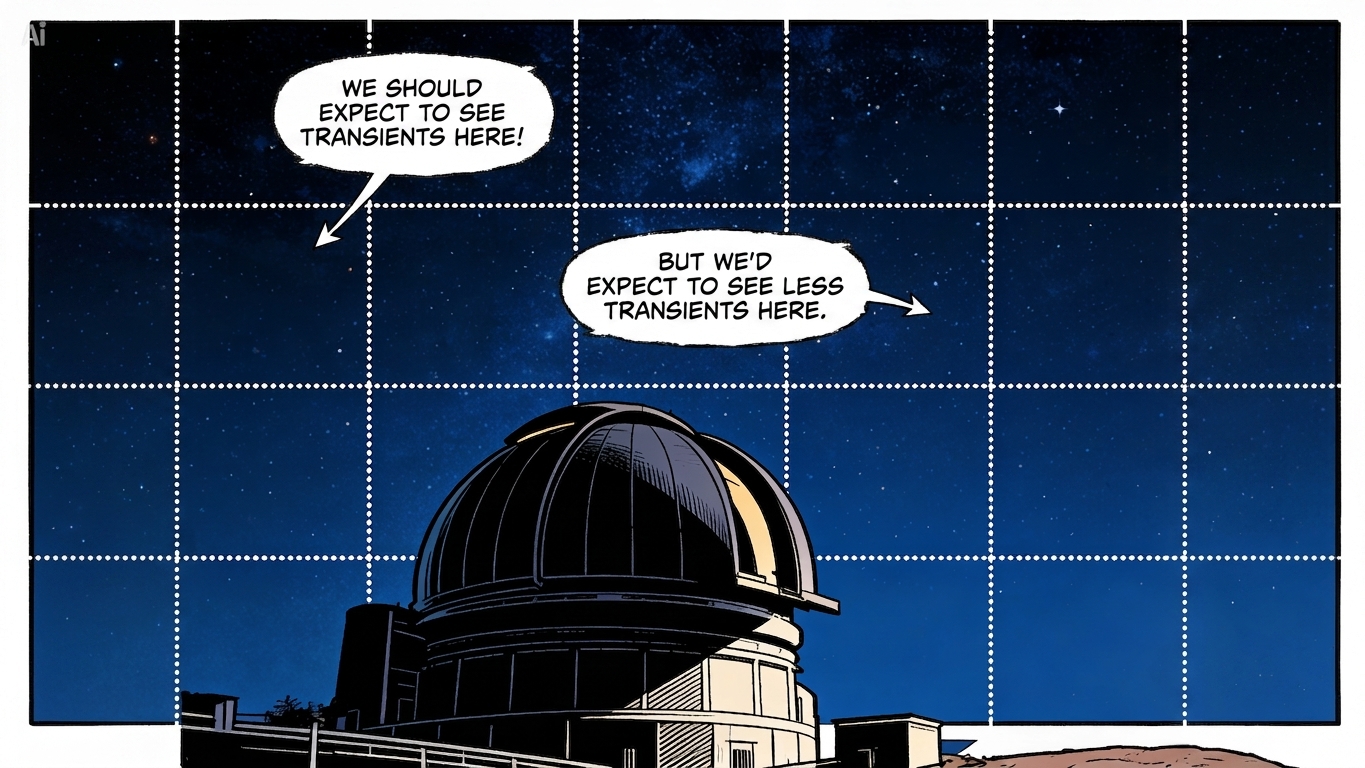
The night sky over Palomar segmented into a grid; bubbles mark where transients should and should not appear.
There’s enough data to know if the telescope was looking into Earth’s shadow or not.
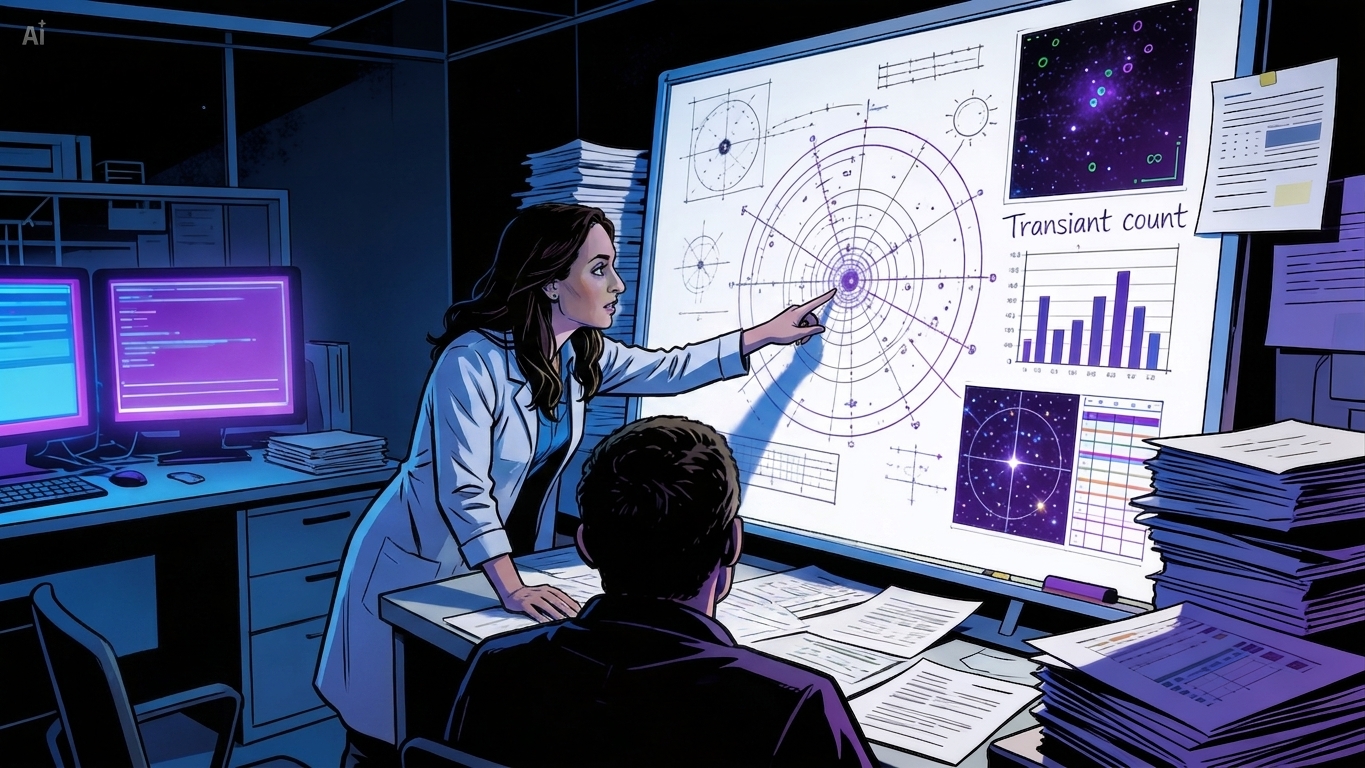
A researcher at a screen tallying transient counts across the sky.
Are there more transients found where we would expect to see them — if they are real?
The result · published 2025
THE SHADOW IS EMPTY
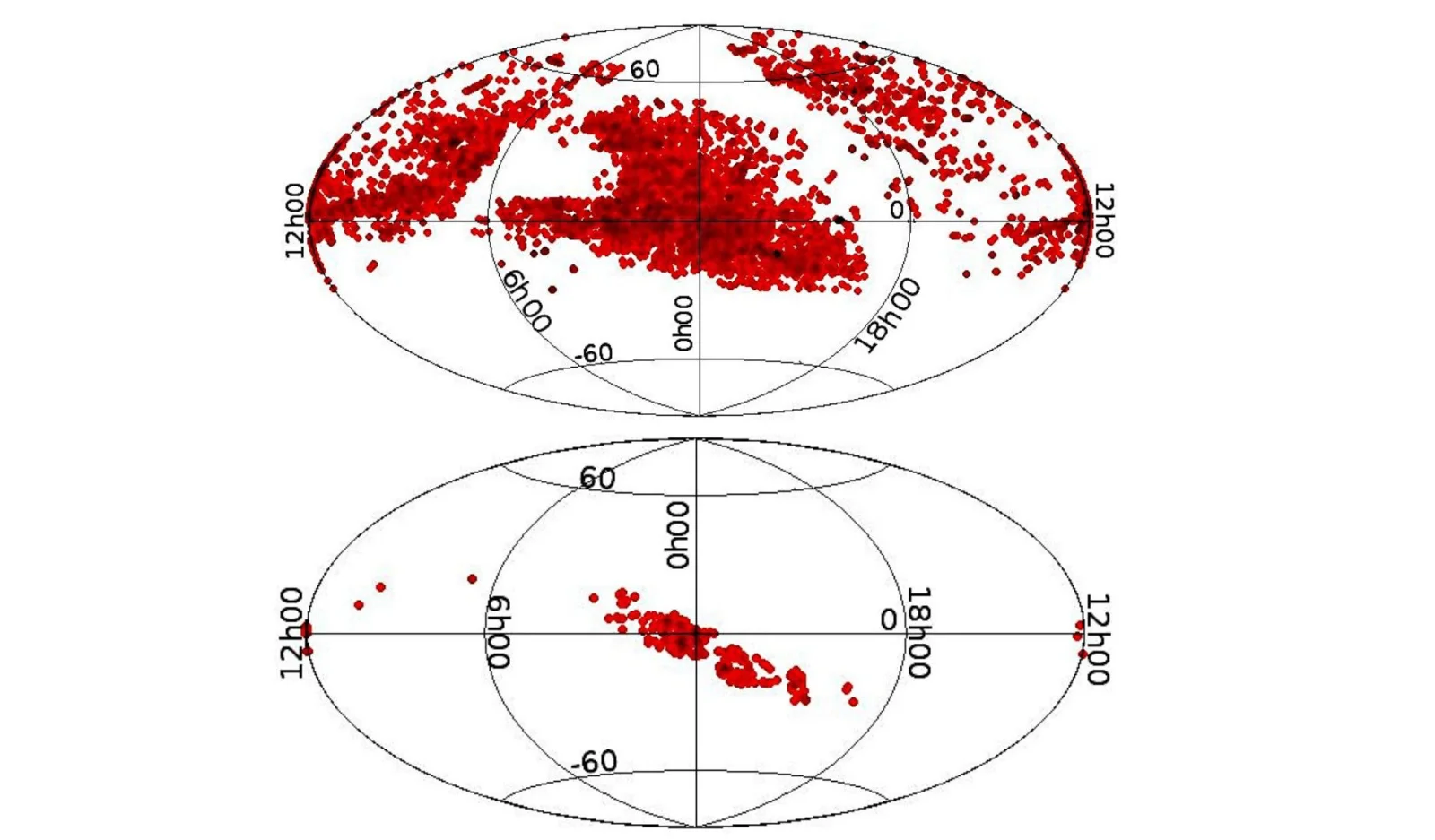
Two Mollweide all-sky maps: every transient candidate, vs the far fewer that fall inside Earth's shadow.
Expected from geometry
1.15%
Observed in shadow
0.328%
Statistical significance
21.9σ
Out of every thousand transients you'd expect about eleven to land inside Earth's shadow by chance. Only three do — the odds of a deficit this big arising by chance are, for all practical purposes, zero.
The conclusion is hard to escape: these flashes are real, reflective objects orbiting the Earth.
Villarroel & Bruehl, PASP 137, 104504 →
Back IN Edinburgh.
"I don't have an explanation for that."— Dr. Nigel Hambly, Royal Observatory Edinburgh · Supercluster interview
Chapter 3
The Bomb and the Lights
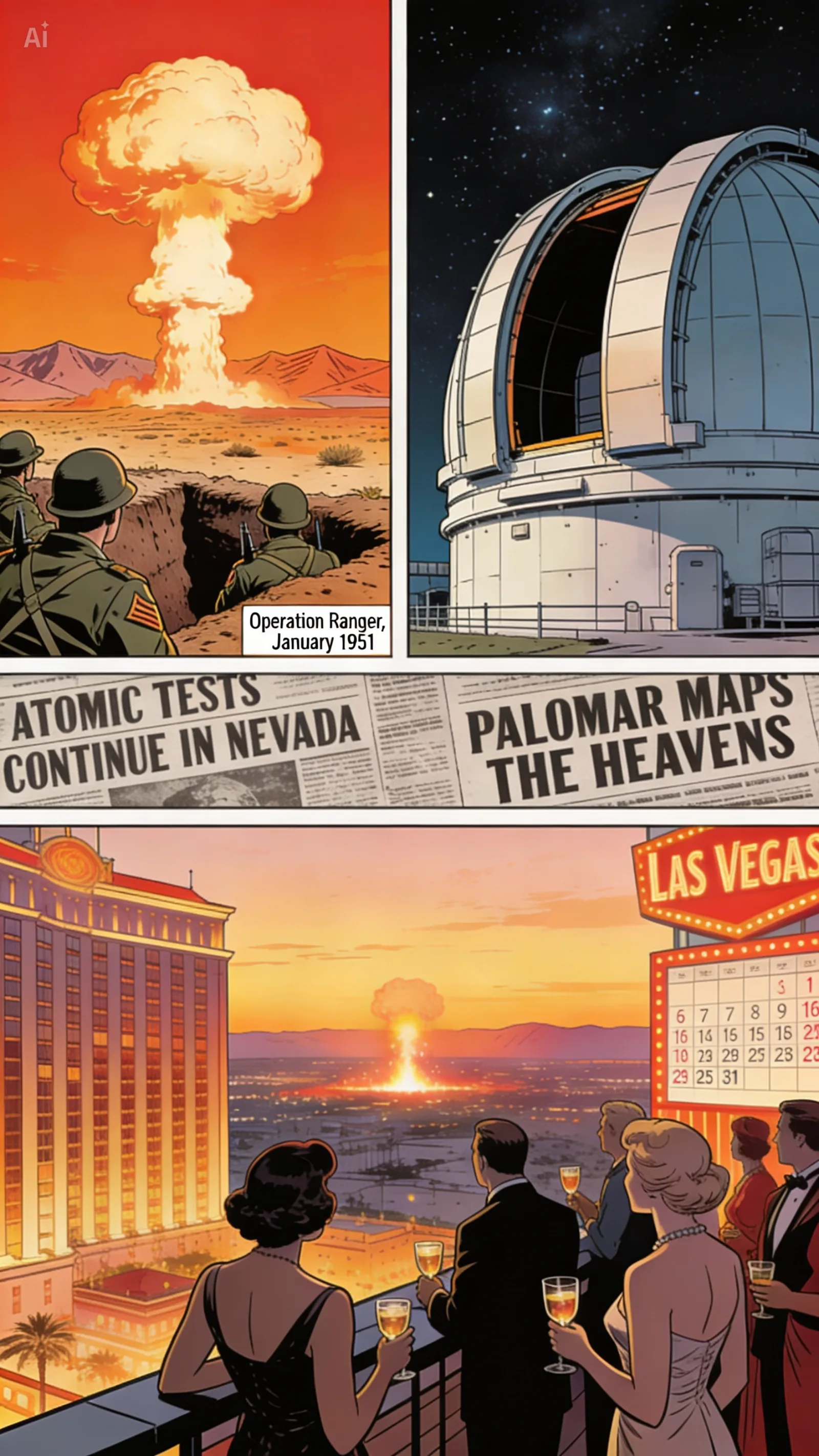
The atomic cocktail parties of 1952.
Dr. Villarroel had noticed something.
The plates with the most transients seemed to be the ones taken close to the days the United States detonated atomic weapons. A hunch. She needed help to test it.
Nashville. Vanderbilt University.
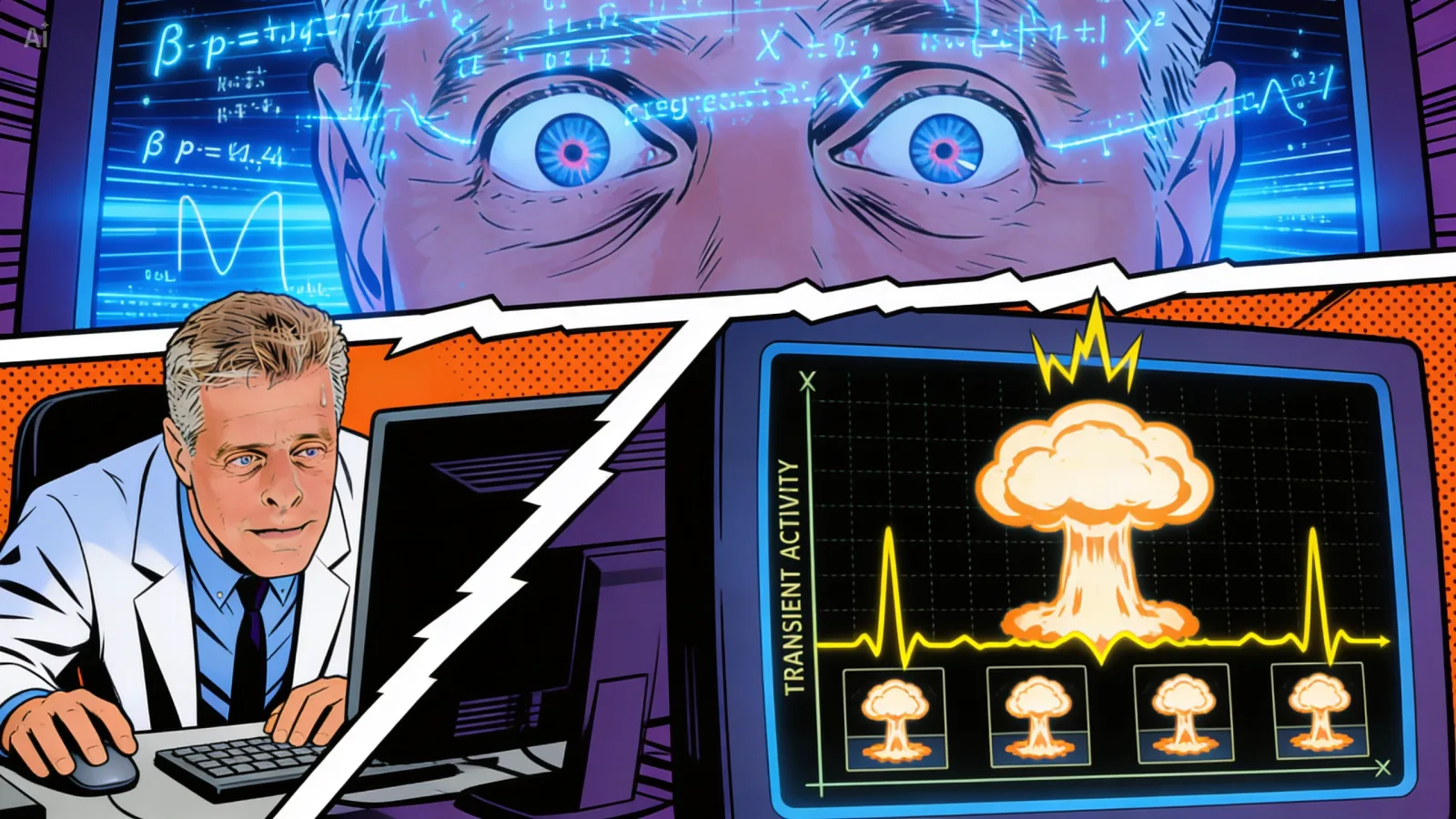
Dr. Stephen Bruehl. Clinical psychologist — expert at pulling signal from noise. He studies pain: the fuzzy, noisy human kind. Villarroel sends him a drive — 2,718 nights of transient data. She wants him to test her hunch.
HE PUTS HER HUNCH UNDER A MICROSCOPE.
Dr. Stephen Bruehl in his lab coat, hand to chin.
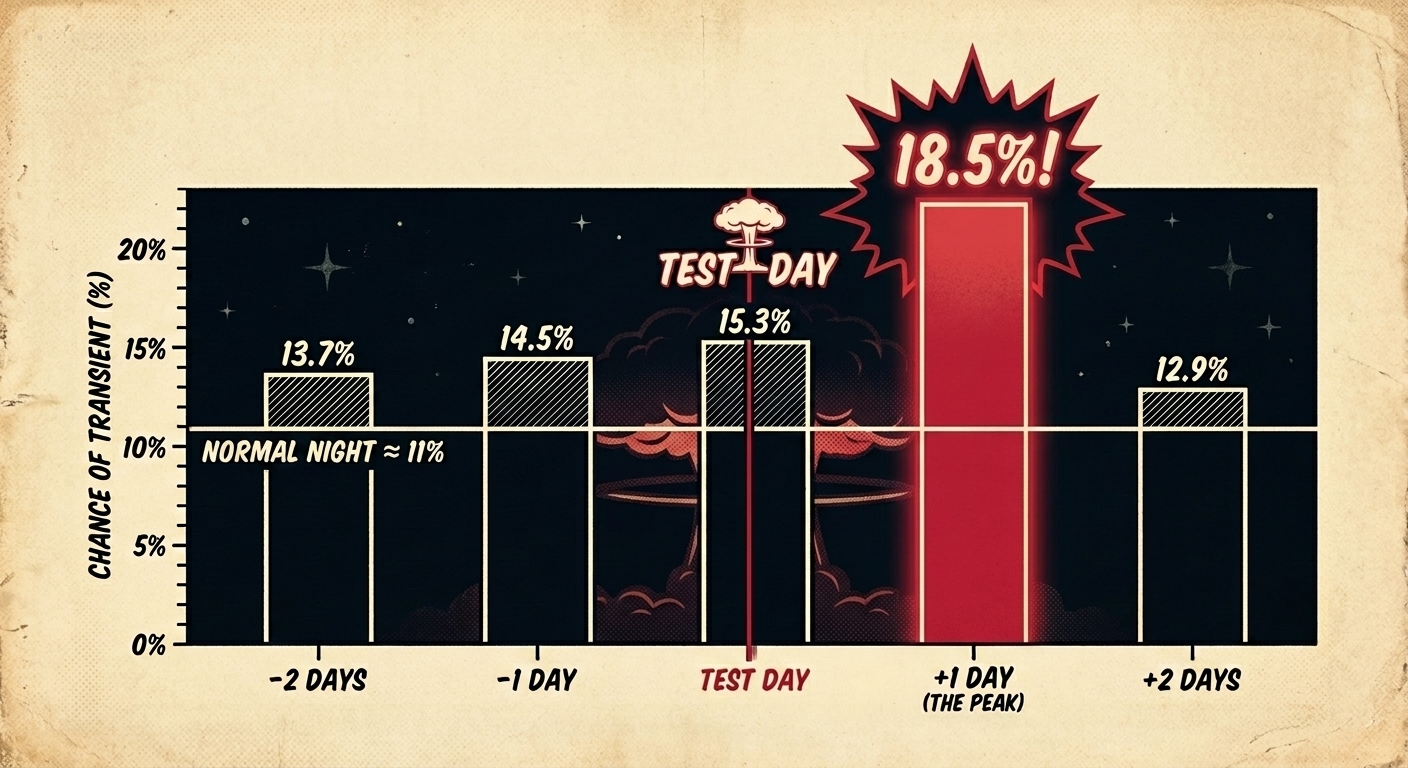
"The magnitude of the association between these flashes of light and nuclear tests was surprising — as was the very specific time at which they most often occurred: the day after a test."— Dr. Stephen Bruehl, Vanderbilt University Medical Center
HER HUNCH WAS RIGHT
Across the seven years POSS-I photographed the sky, a transient showed up on about 11% of nights. When lined up against the dates of above-ground nuclear tests, the odds tilt. They rise as a test approaches — and they peak the day after it: 18.5%.Not the day of the blast. The day after. And of every point in that five-day window, the day-after spike is the only one that clears statistical significance.
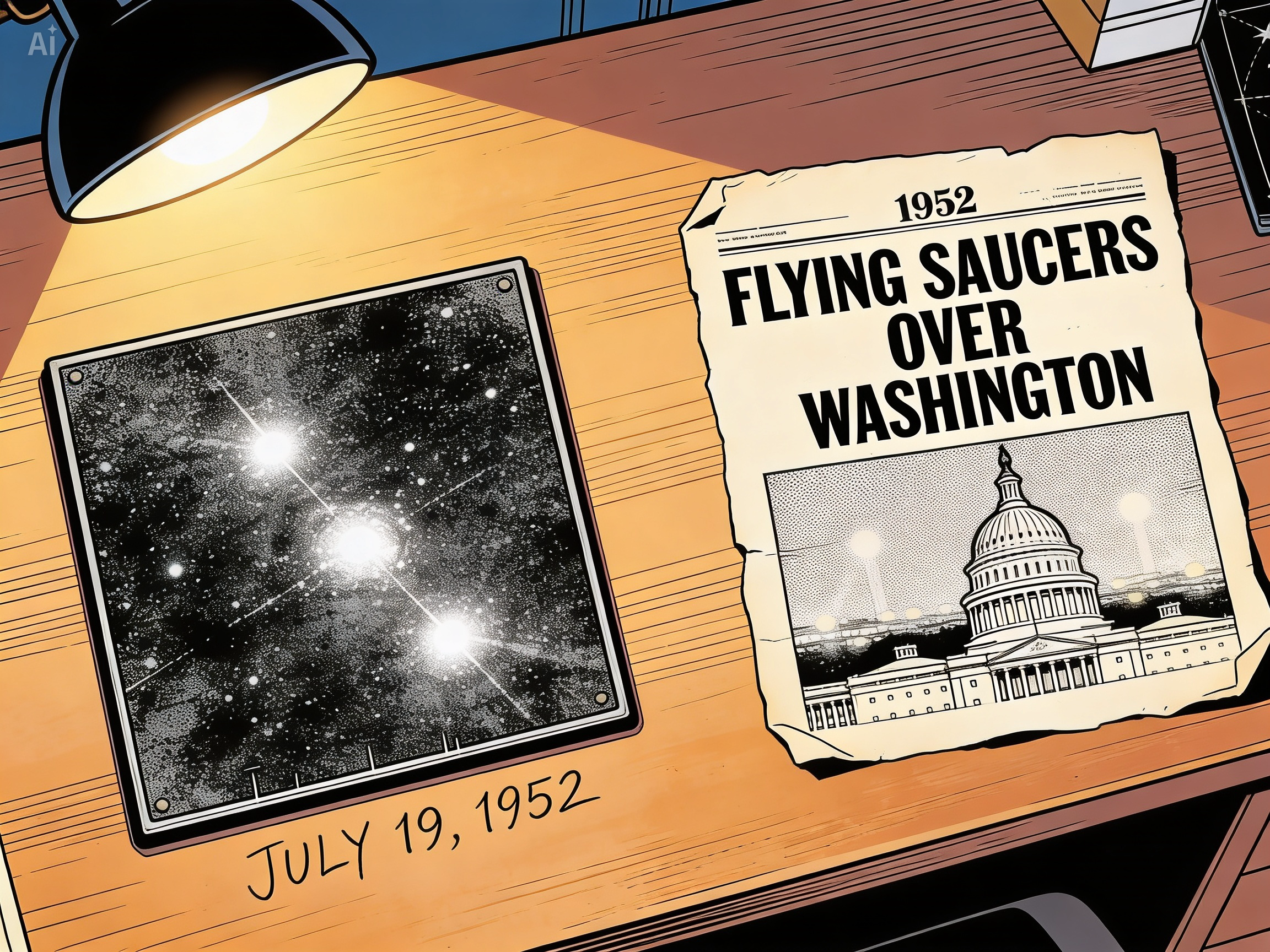
ONE DATE KEPT TURNING UP…
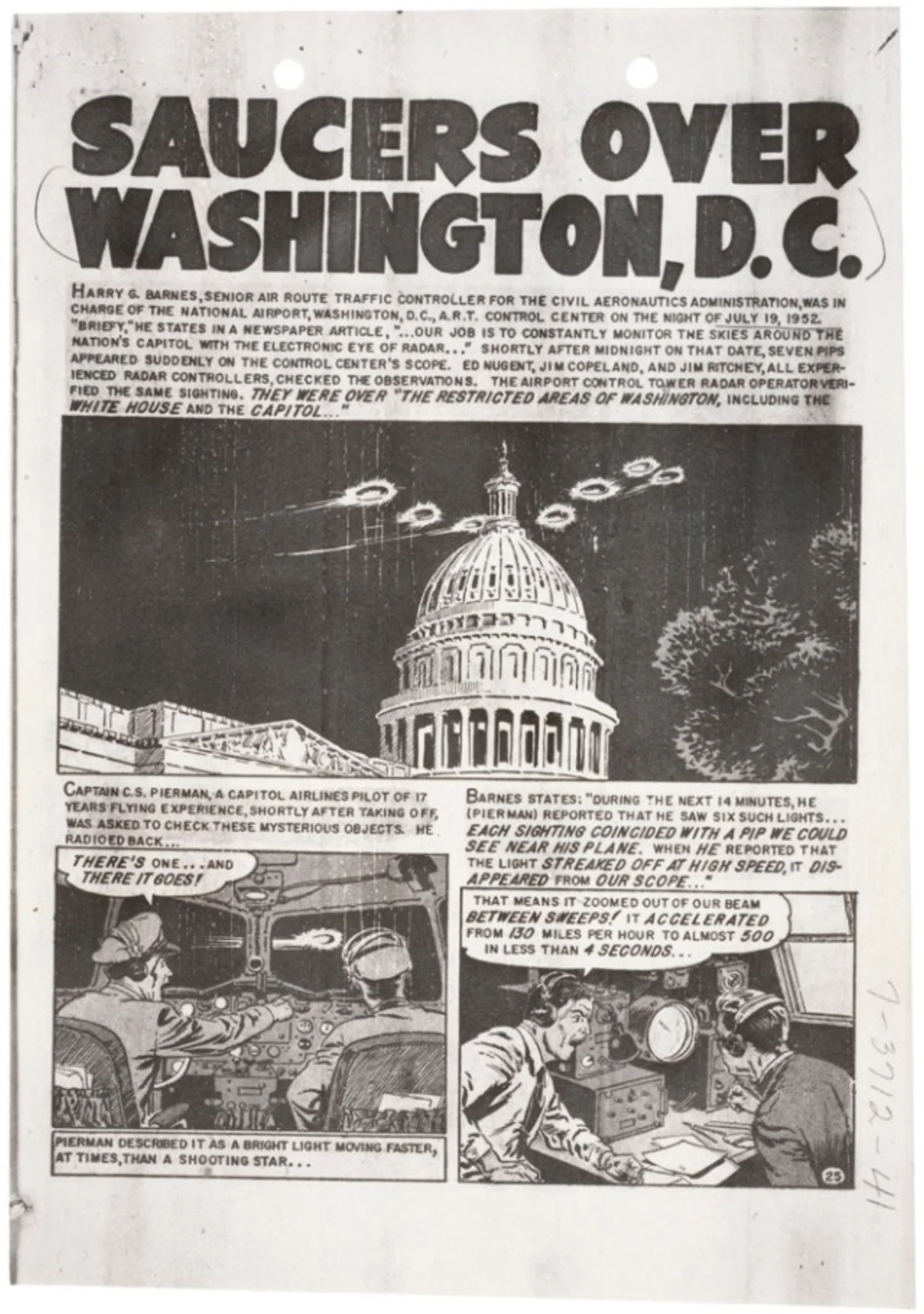
A desk: a Palomar plate showing three points of light dated July 19 1952, beside a 1952 newspaper headlined FLYING SAUCERS OVER WASHINGTON.
“Apparently, in 1952, during two consecutive weekends — on the 19th of July and the 27th of July — there was the most famous UFO sighting probably during the last hundred years over Washington. And it was so big that even the US Air Force had to make a special press conference.”— Dr. Beatriz Villarroel, Penn State chapter, “My Personal Journey Through the Unknown”
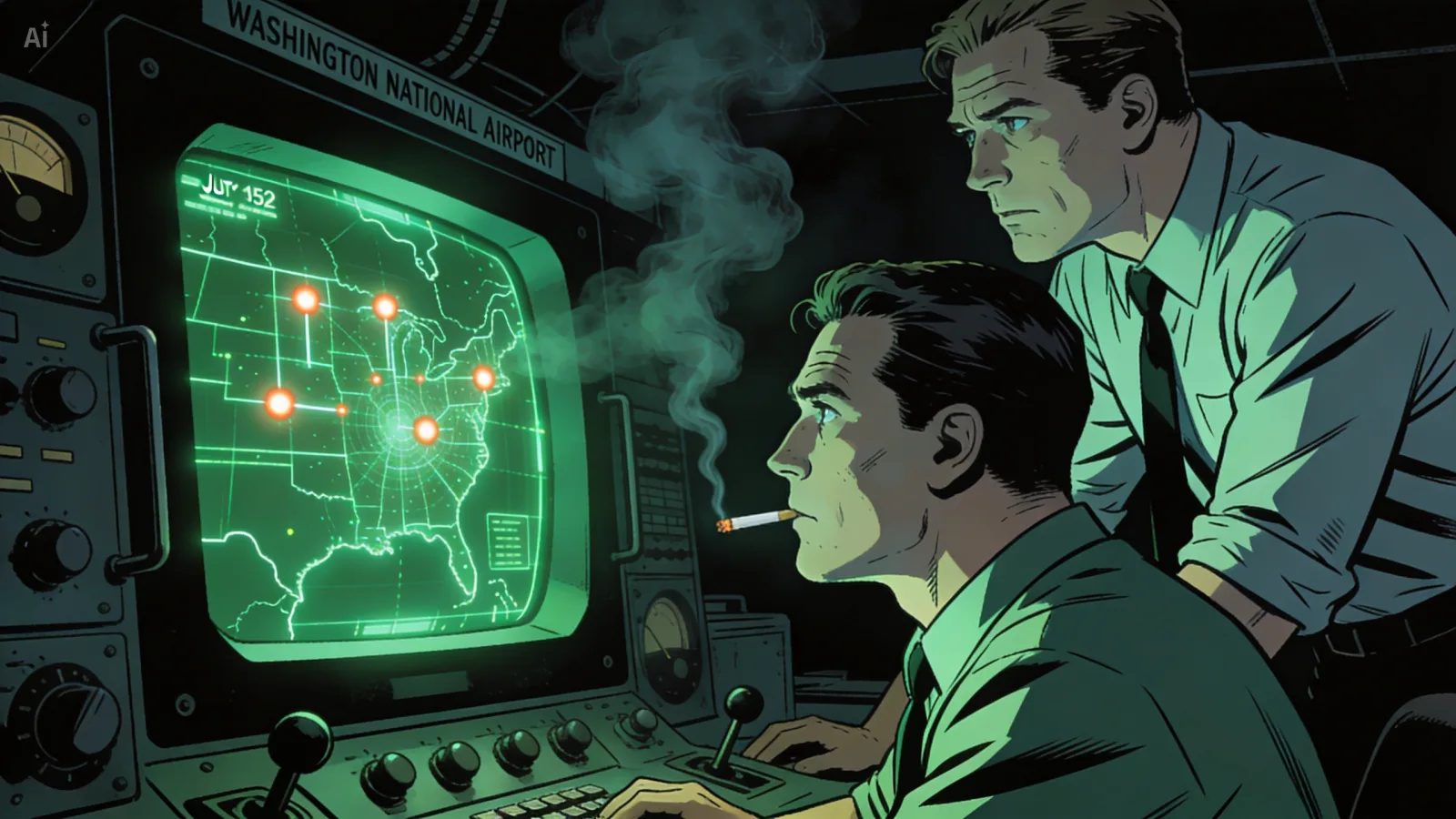
THE WASHINGTON UFO INCIDENT · JULY 19, 1952
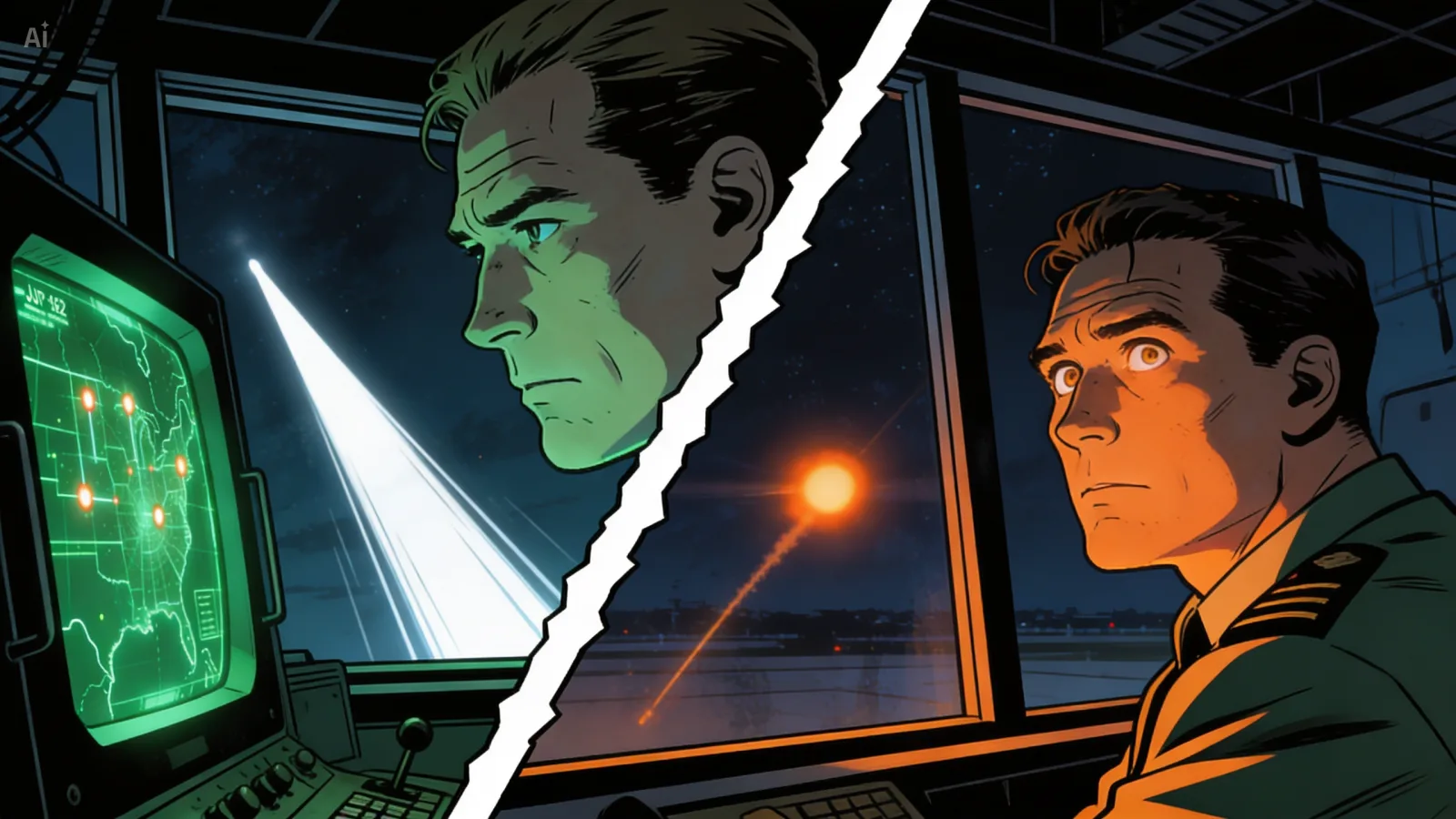
Nugent Here's a fleet of flying saucers for you.
Barnes · National Airport We knew immediately that a very strange situation existed… their movements were completely radical compared to those of ordinary aircraft.
Airman Brady · Andrews AFB An object which appeared to be like an orange ball of fire, trailing a tail… unlike anything I had ever seen before.
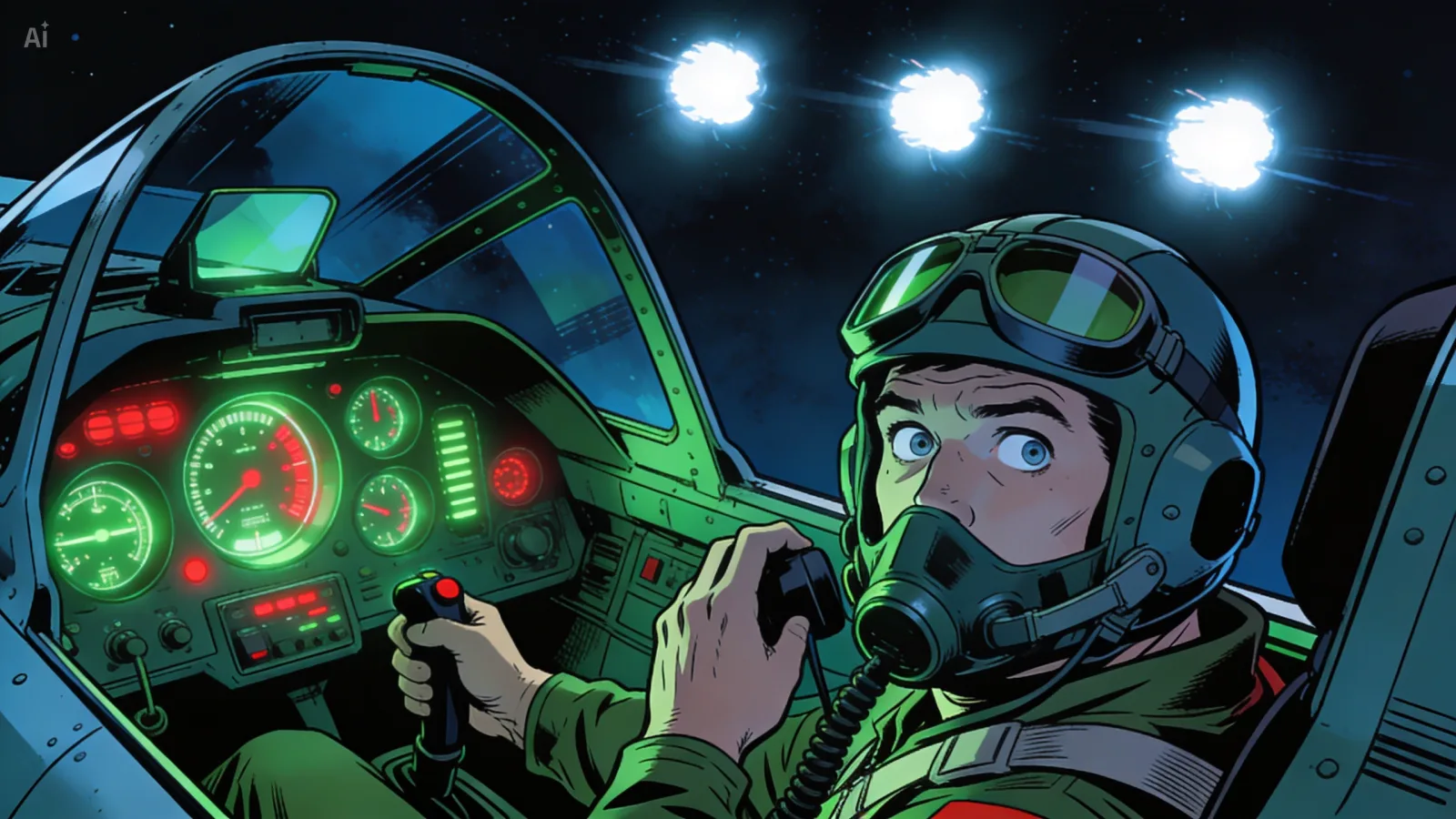
Albert Chop · USAF Press Lt. Patterson radioed for instructions when the objects surrounded his fighter. Nobody answered. Because we didn’t know what to tell him.
Contemporary 1952 news comic, "Saucers Over Washington, D.C." U.S. National Archives, public domain.
Palomar Mountain, California.The same night.
2,500 miles west. Same sky. The 48-inch Schmidt camera was running a fifty-minute red exposure. The observer had no radio to Washington. He didn't know what had just been photographed.
No one noticed. No one would — for seventy years.
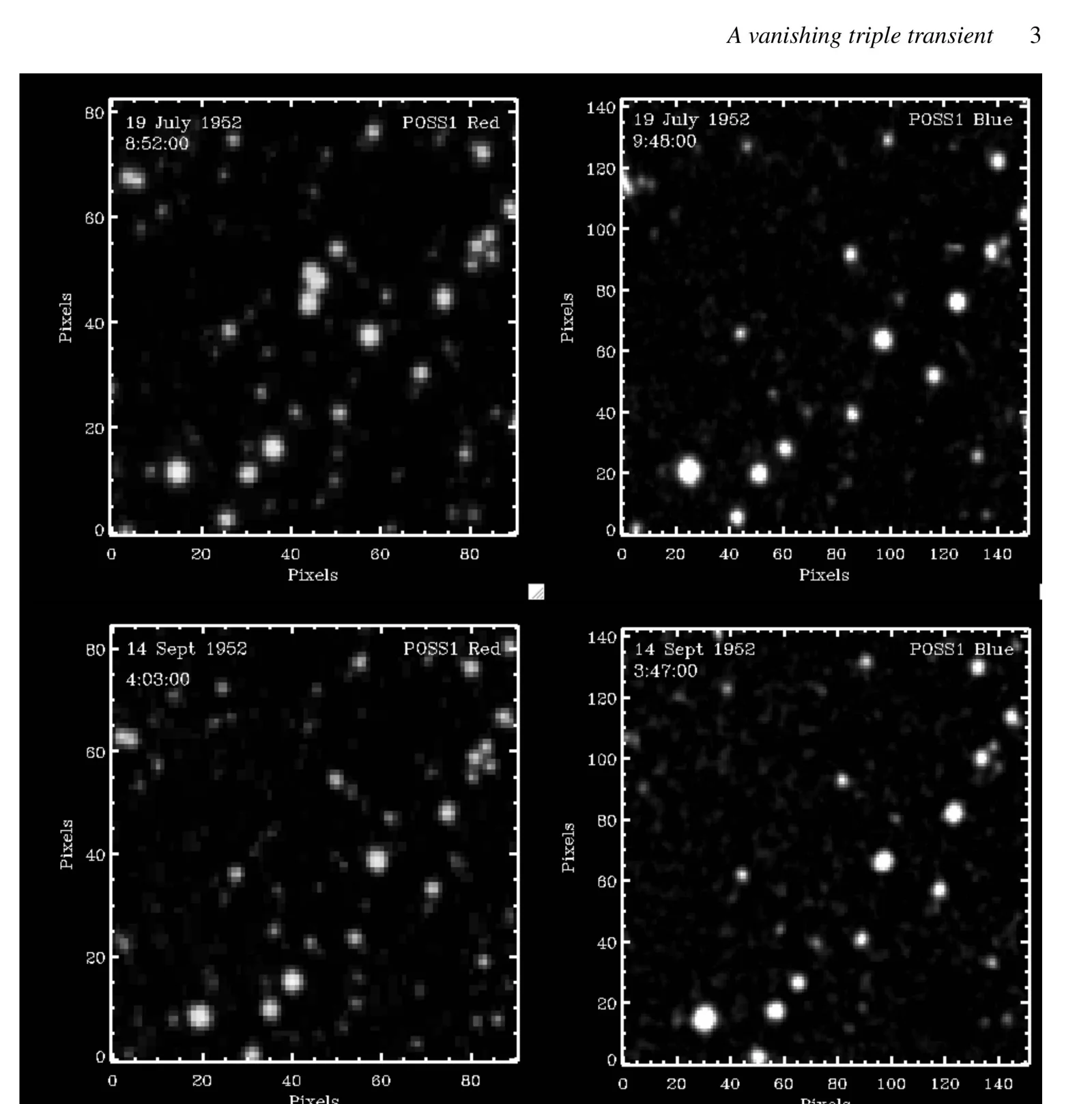
THE SAME NIGHT, AT 08:52 UT
Three pinpoints of light. One photographic plate. Vanished within fifty minutes. The Palomar archive logged them — the newspapers logged what flew over the White House that same night.
A POSS-I plate cutout grid: the triple flash above centre, 56 minutes later, then two months later — gone.
Top-left: the triple flash, just above centre.
Top-right: 56 minutes later. Gone.
Bottom row: two months later. Still gone.
Solano, Villarroel et al. — "A bright triple transient that vanished within 50 minutes," MNRAS 527, 6312 (2024). Figure 2.
TEN DAYS LATER · THE PENTAGON
Major General John Samford at the July 29 1952 Pentagon press conference.
Major General John Samford addresses the press — July 29, 1952, the largest Pentagon press conference since the Second World War.
We have received and analyzed reports from credible observers of relatively incredible things— Maj. Gen. John A. Samford, USAF Director of Intelligence · July 29, 1952
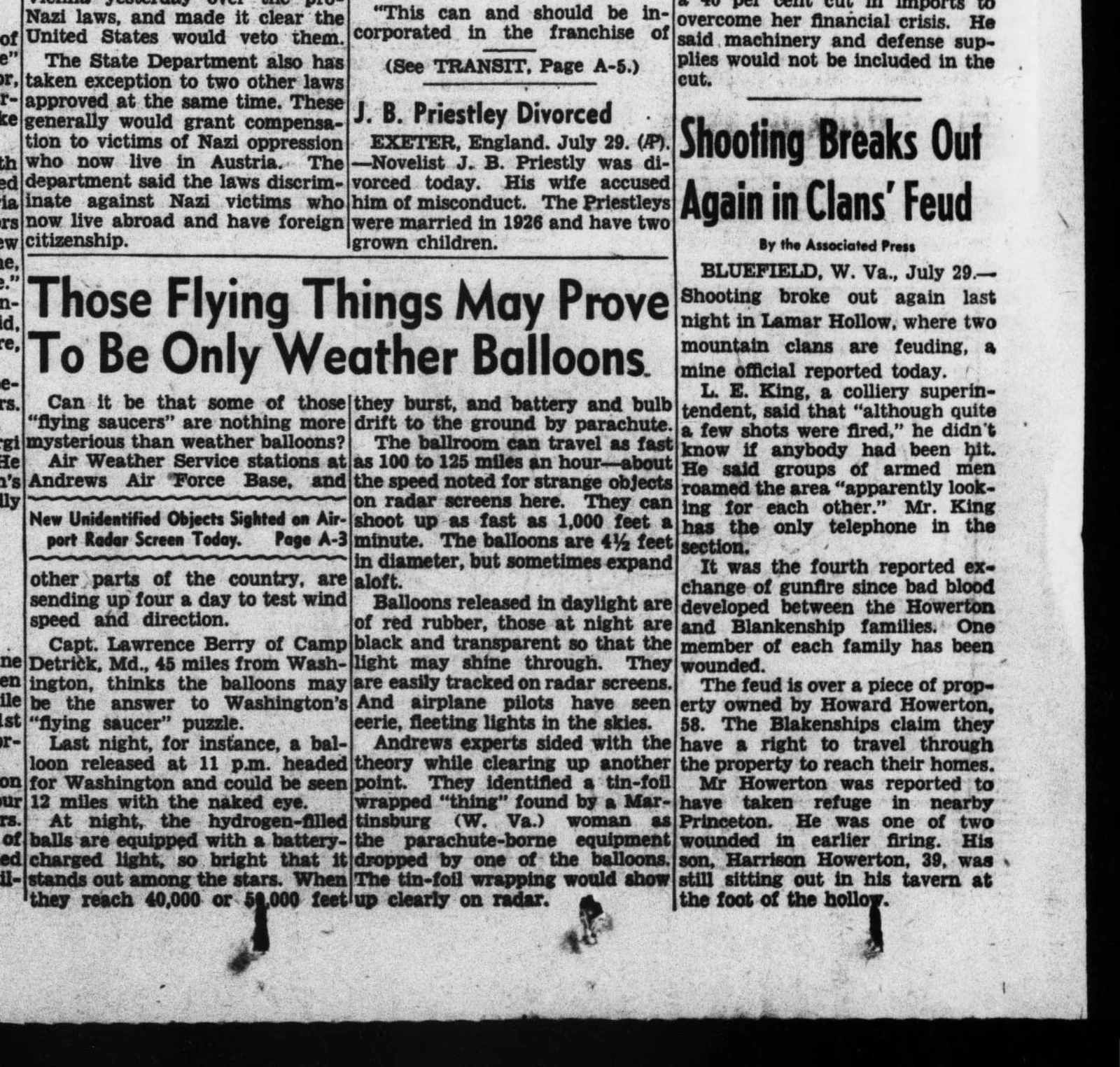
THE SAME EVENING'S PAPER
Evening Star clipping, July 29 1952: Those Flying Things May Prove To Be Only Weather Balloons.
THE EVENING STAR · WASHINGTON, D.C. · JULY 29, 1952
The official explanation: temperature inversions. Weather balloons. Misidentified stars. Nothing to see.The Evening Star, Washington D.C. — Library of Congress, Chronicling America. Public domain.
SO — WHAT ARE WE DEALING WITH?
Four years on, the data tightens. The Earth-shadow holds. The nuclear-test correlation holds. In podcasts and press interviews, she starts to say what she thinks it is.
A can of Coca-Cola tumbling in near-Earth space, catching a glint of sunlight.
"Let's say ET sent something two hundred thousand years ago and forgot a can of Coca-Cola in space… and at some point we see these little glints."— Beatriz Villarroel, podcast interview, 2025.
A flat, mirror-like object in orbit flaring a brief, bright reflection of sunlight.
"You don't get that kind of solar reflections from round objects… only if something is very flat and very reflective and reflects the sunlight with a short flash."— Beatriz Villarroel, EarthSky, October 2025.
Epilogue
Where is the story now?
INDEPENDENT REPLICATION
Brian Doherty
Dallas, Texas. Independent researcher · statistical analysis & data analytics.
No university, no lab, no funding. He pulled the dataset, wrote his own code from scratch, and ran every test independently — both the nuclear-test correlation and the Earth-shadow deficit held up.
Doherty (2026), arXiv:2604.00056 → Code on GitHub →
ANOTHER ARCHIVE, ANOTHER CONTINENT
Ivo Busko
Independent researcher, formerly STScI · Hamburg APPLAUSE archive.
Maybe it was only Palomar — one telescope, one drawer of plates. Busko looked at a different archive entirely: the digitised Hamburg Observatory Schmidt plates, mid-1950s. Same narrow, star-like flashes. Different telescope, different continent, same signature.
Busko (2026), arXiv:2603.20407 →
WHEN MAGNETIC STORMS HIT
Kevin Cann
Independent researcher · former US Navy reactor operator (USS South Carolina).
Cann cross-referenced the transient dates with the geomagnetic Kp index. The flashes drop sharply during strong magnetic storms — then, 25–45 days later, once the field calms, surge back to ~3× baseline. A camera defect can't care about Earth's magnetic field. Something trapped in it can.
Cann (2026), arXiv:2604.04950 →
Villarroel I cannot find any other consistent explanation other than that we are looking at something artificial before Sputnik 1. For me, this looks technological. But I may be wrong.
"It's a Very Exciting Time" podcast, Episode 79 · November 2025 →
The author
The End — Digger №01

You just read the whole thing, free.

If it was worth your time, there are two ways to keep Digger going.
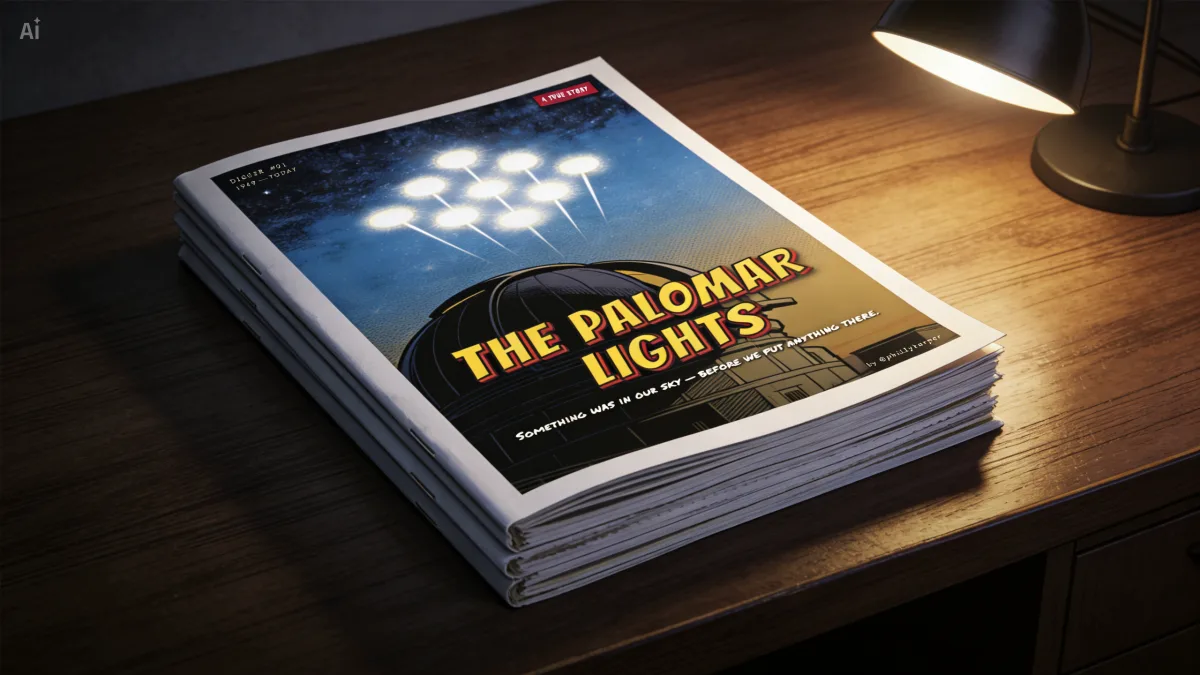
The Palomar Lights — first edition print, signed and numbered.

Own the first edition, in print.

Signed and numbered. Just 150 copies — when they're gone, they're gone.

4 / 150 sold · 146 left
Pre-order the first edition — £20 →
Ships UK · EU · US · Canada · Australia · NZ · Japan  ·  questions? hello@phillyharper.com
Phil Harper, author of The Palomar Lights.
Made by Phil

I'm Phil. I make Digger Comics and write The Digger on Substack — this comic is a new format I'm trialling.

Not ready for the print? Buy me a coffee instead — it funds Digger №02.

☕ Buy me a Ko-fi →
— or just stay in the loop —

Want to know when Digger №02 lands? Drop your email — nothing else, ever.

You're on the list. I'll email when Digger №02 ships — nothing else.